
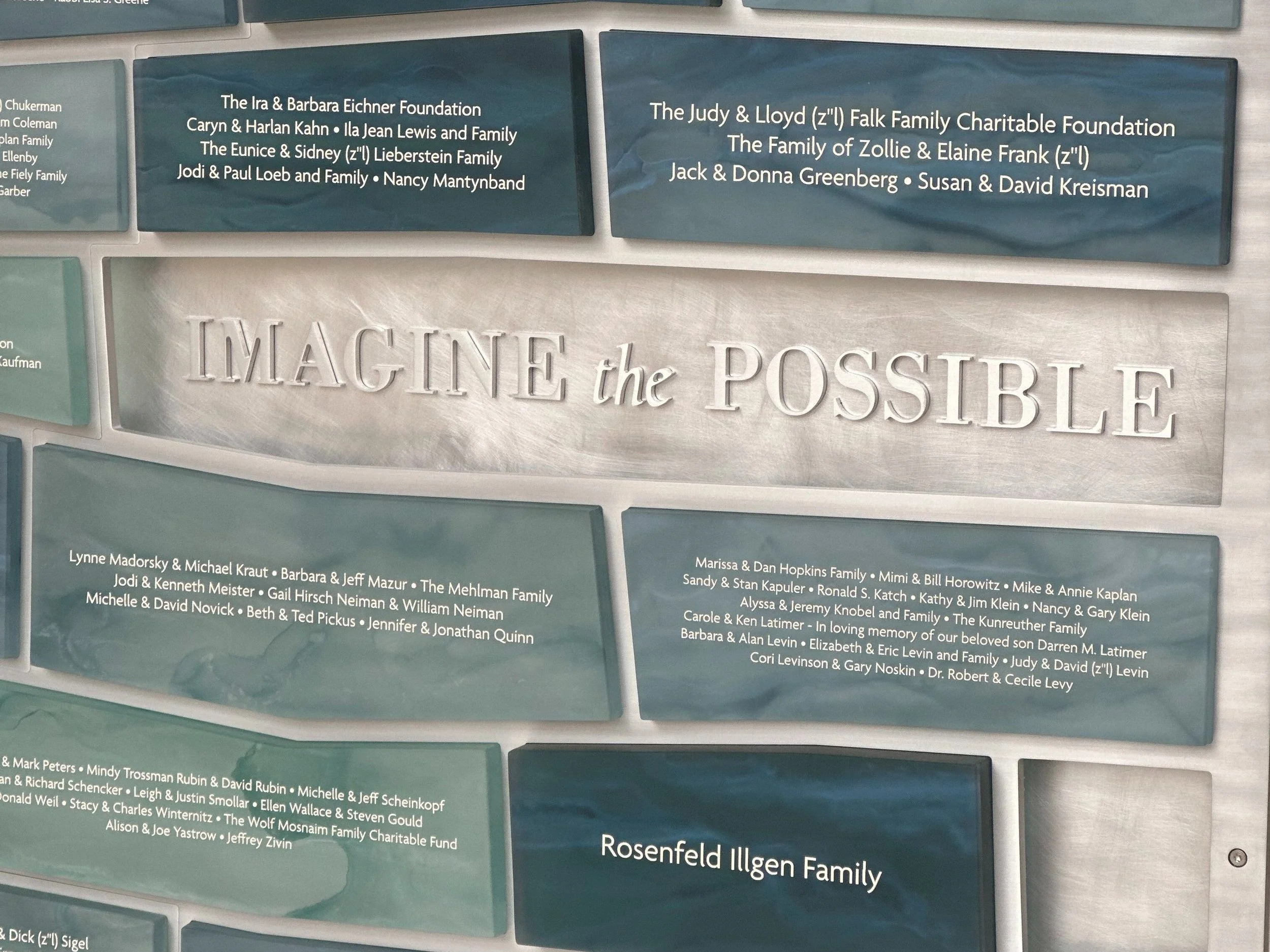
donor recognition inspired by Architecture
North Shore Congregation Israel | Imagine the Possible Campaign
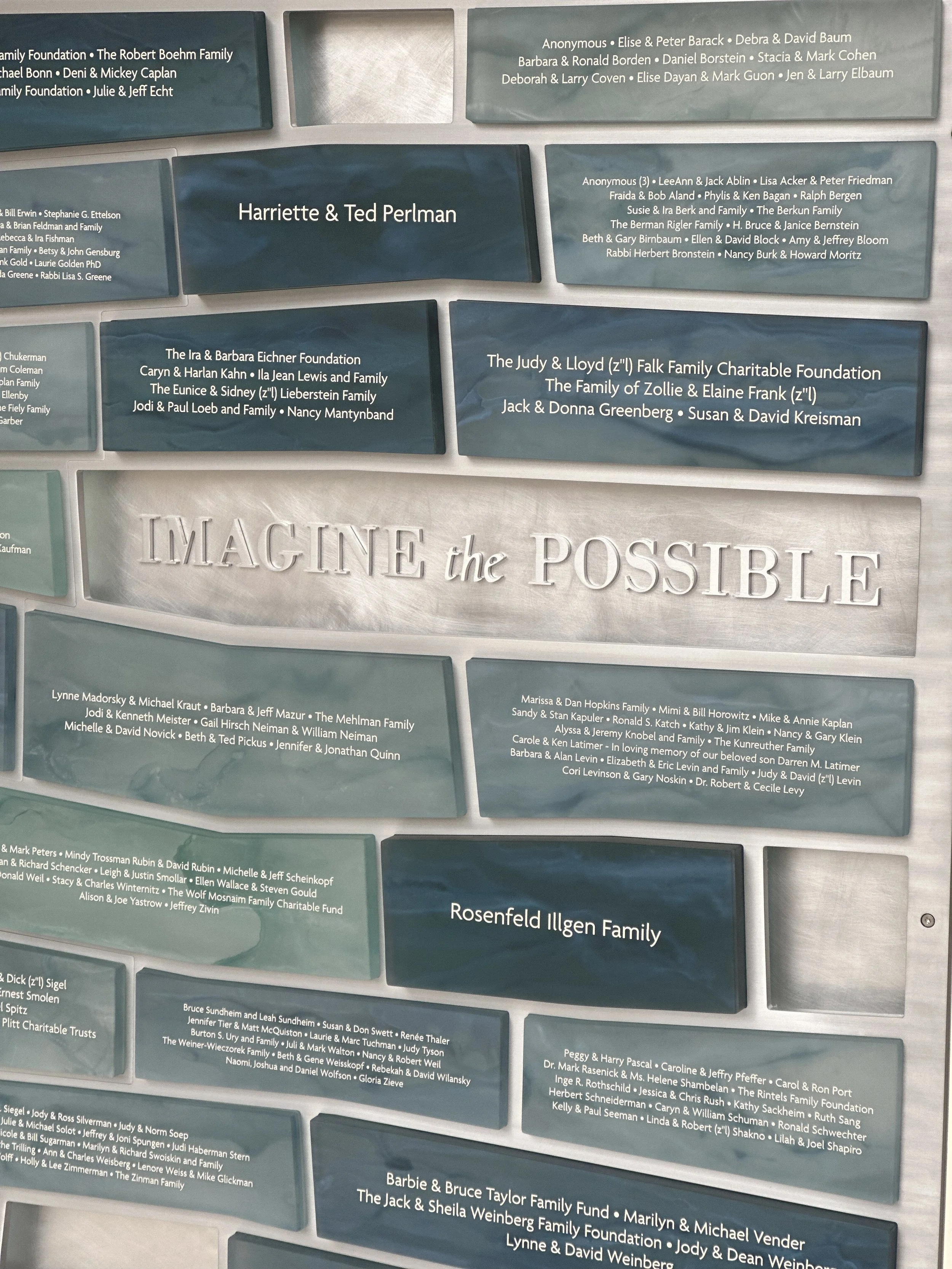
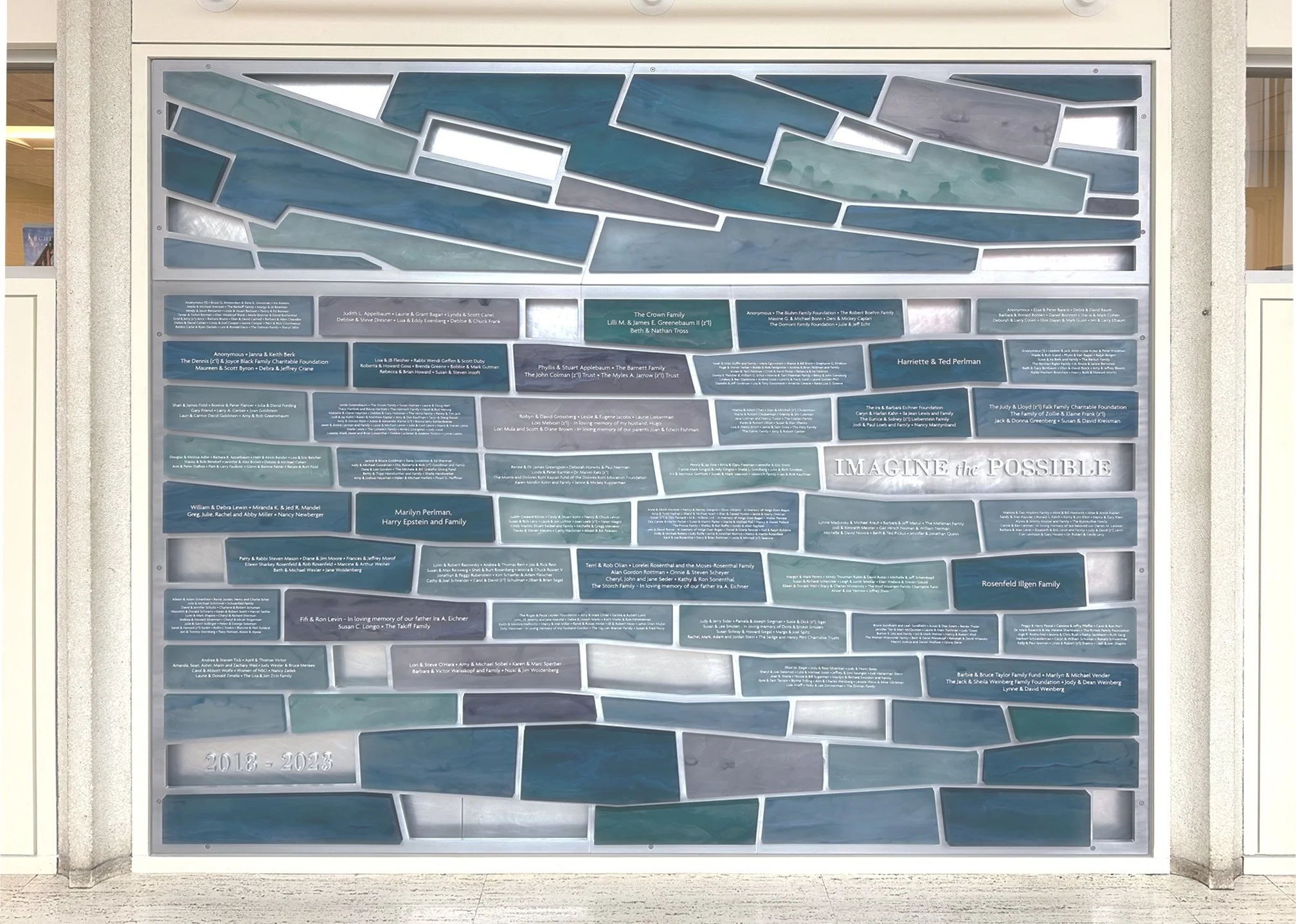
For North Shore Congregation Israel's Imagine the Possible Campaign, Spolar Studio designed, fabricated, and installed a custom donor recognition wall inspired by the synagogue's distinctive architecture and its setting along Lake Michigan.
The project brought together architectural inspiration, thoughtful design, custom material development, and precision fabrication to create a recognition installation celebrating the generosity of the congregation's community.
From our earliest conversations through final installation, each stage was an opportunity to explore possibilities, refine details, and develop a solution specific to the space.
Understanding the Space
Every project begins with understanding its surroundings, its purpose, and the people it serves.
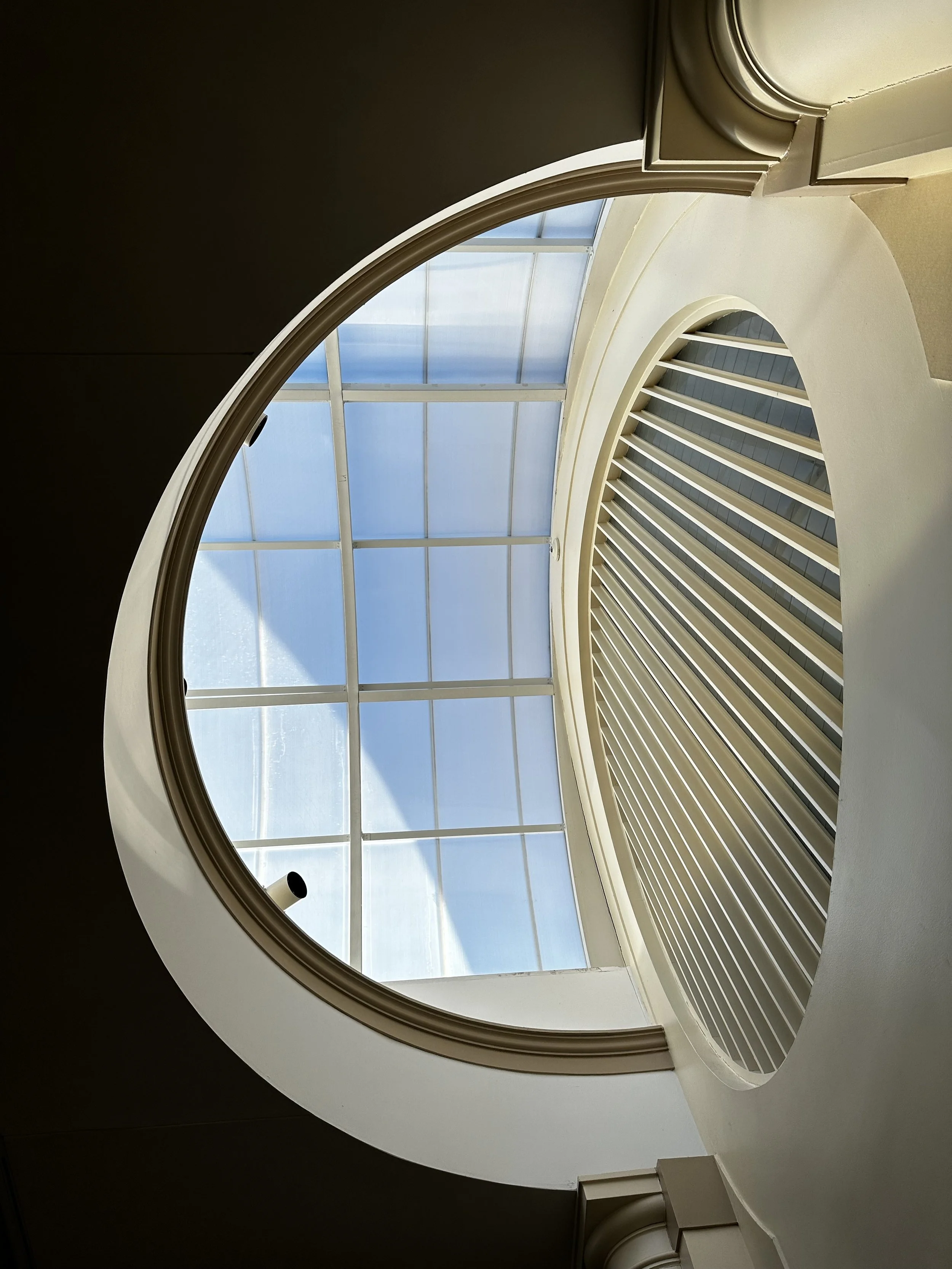
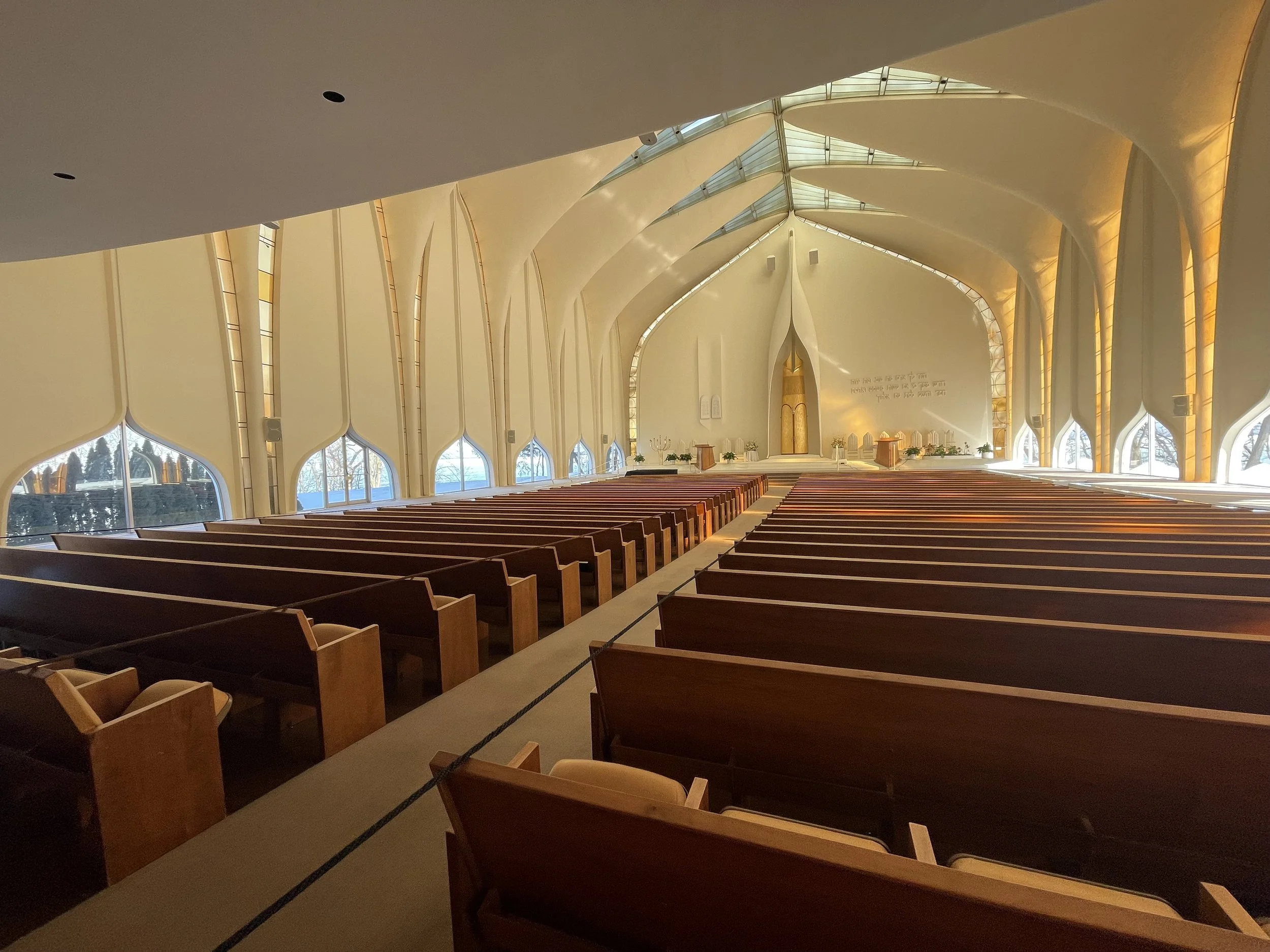
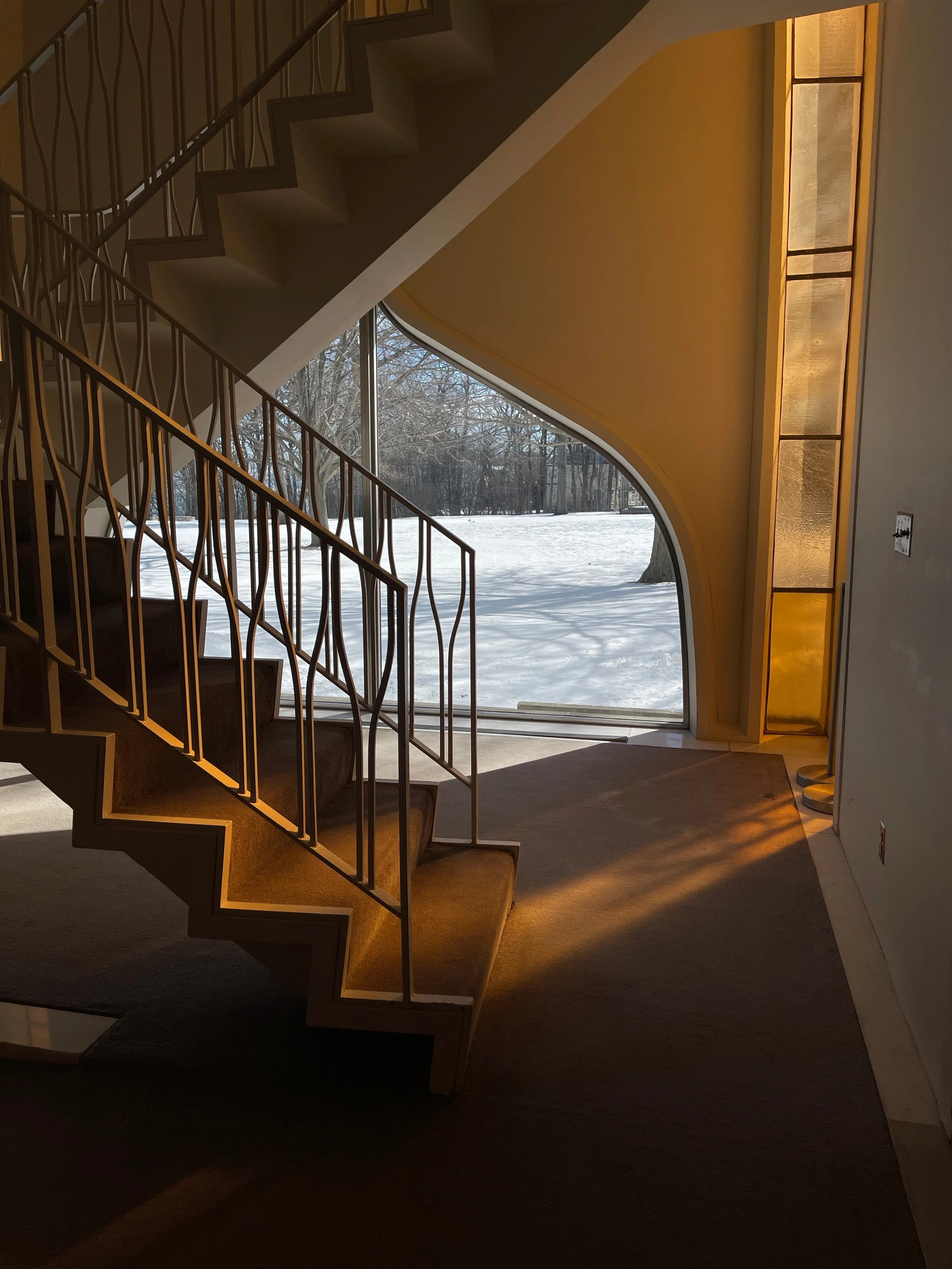
North Shore Congregation Israel's synagogue, designed by architect Minoru Yamasaki, provided a distinctive starting point. Its architectural character, natural light, and proximity to Lake Michigan offered inspiration for a recognition installation that would feel connected to its surroundings.
Rather than approaching the project with a predetermined design or recognition system, we began by considering the congregation's goals, the available space, and the opportunities presented by the architecture.
These early considerations helped establish a foundation for the design process.
Establishing a Visual Direction
Our design process begins with precedents: a collection of reference images, materials, and examples that help us explore potential design directions with our clients.
Precedents are not proposed designs. They serve as conversation starters, helping us identify what resonates, what doesn't, and which approaches might be appropriate for a particular project.
For North Shore Congregation Israel, we explored examples of donor recognition, architectural forms, materials, and finishes. These references helped guide conversations about the character of the installation and establish a shared visual direction before design work began.
This early collaboration allows us to better understand our clients' preferences and make more informed design decisions as the project progresses.
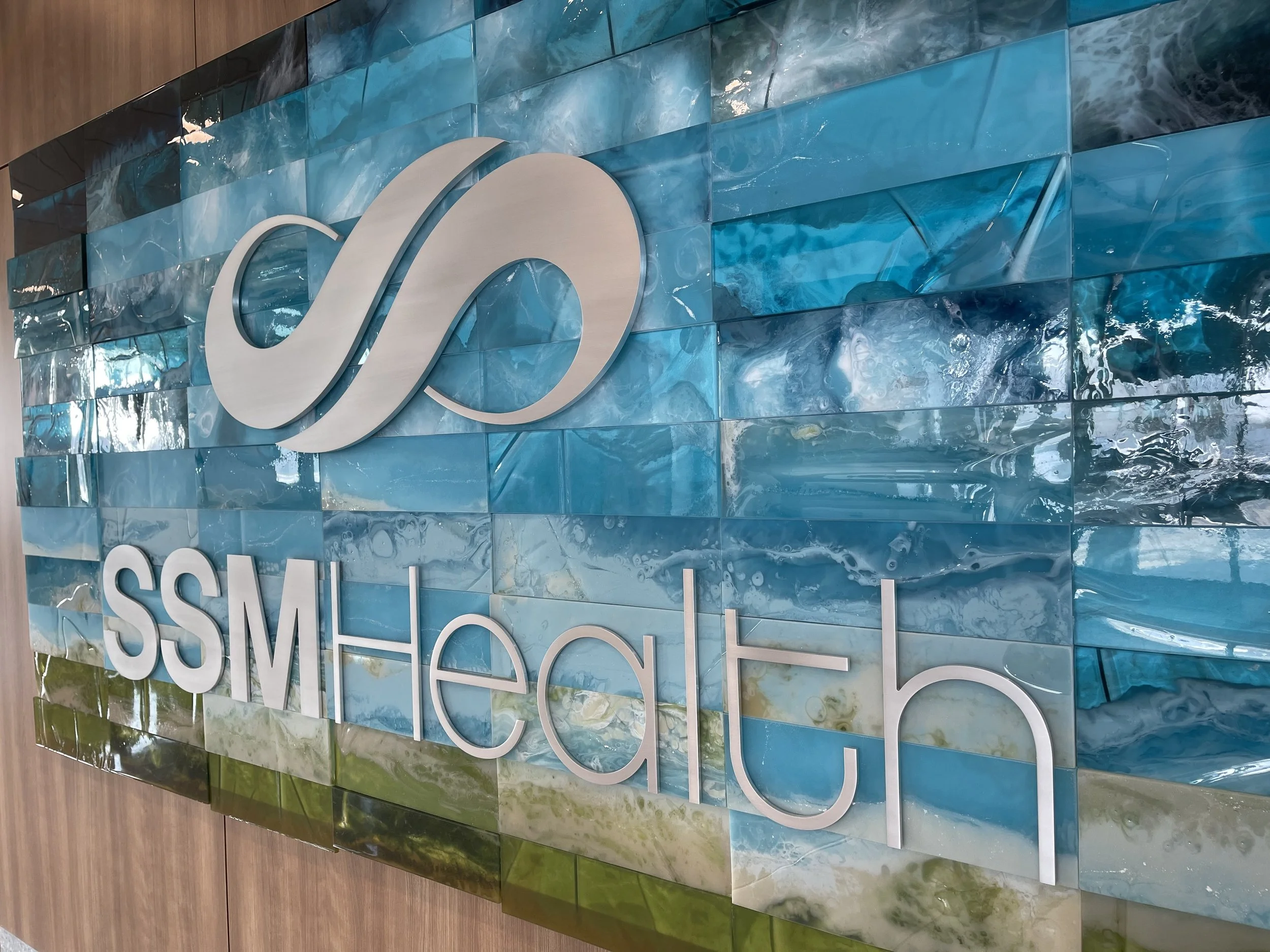
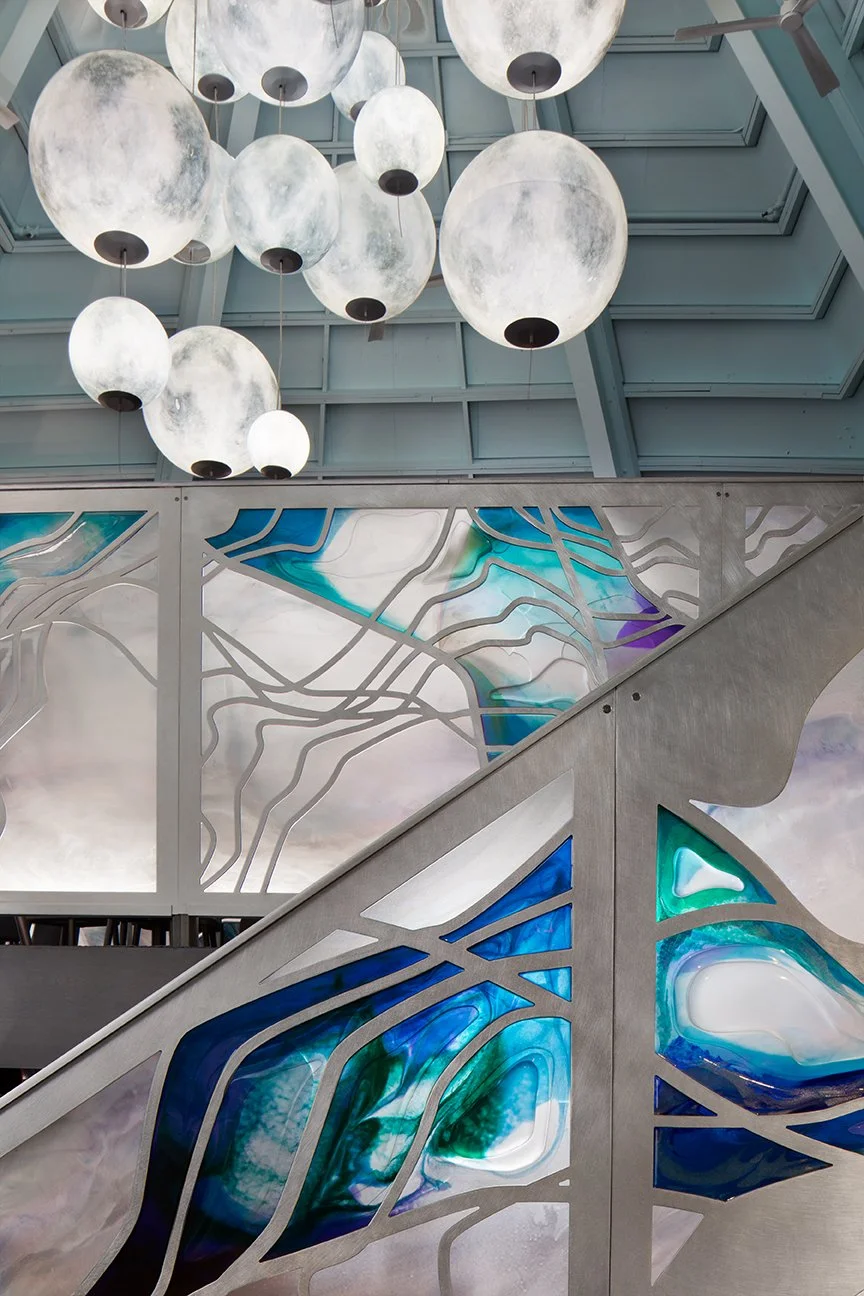
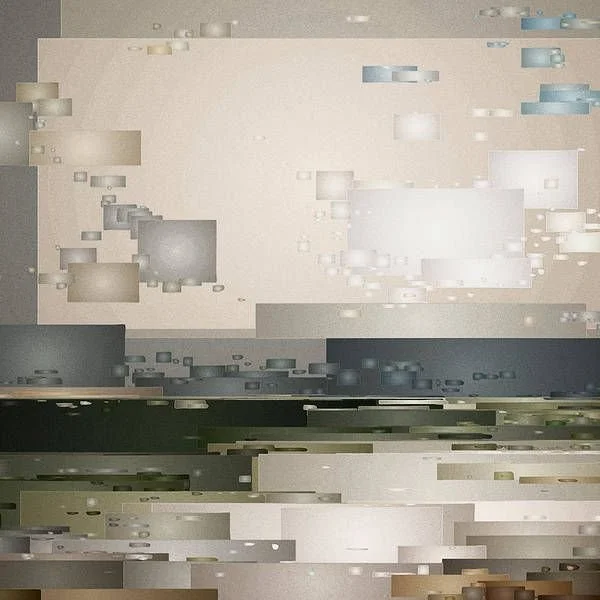
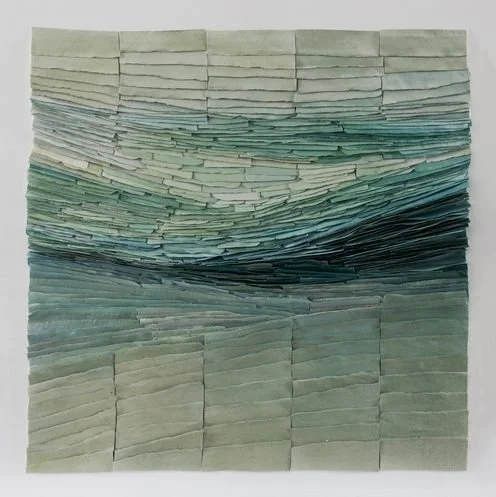

These precedents represent the visual references that resonated most with the North Shore Congregation Israel project team. Their feedback helped us identify preferred materials, forms, and design qualities, providing a shared direction for the concepts we would explore next.
Exploring the Possibilities
With an initial direction established, we moved into concept development.
This is where research, conversations, and inspiration begin to take shape as actual design possibilities. We explore different approaches to composition, materials, scale, and how recognition elements might be organized within a space.
For North Shore Congregation Israel, we developed four initial concepts, each offering a different interpretation of the project's goals and architectural setting.
Presenting multiple approaches gave the project team an opportunity to compare possibilities, discuss priorities, and identify which elements best suited their vision.
Through this collaborative review, the scope was refined to a single recognition wall, and a preferred concept was selected for further development.
Concept development is an important part of our process. Exploring possibilities early helps us establish a thoughtful direction before investing time in the finer details.
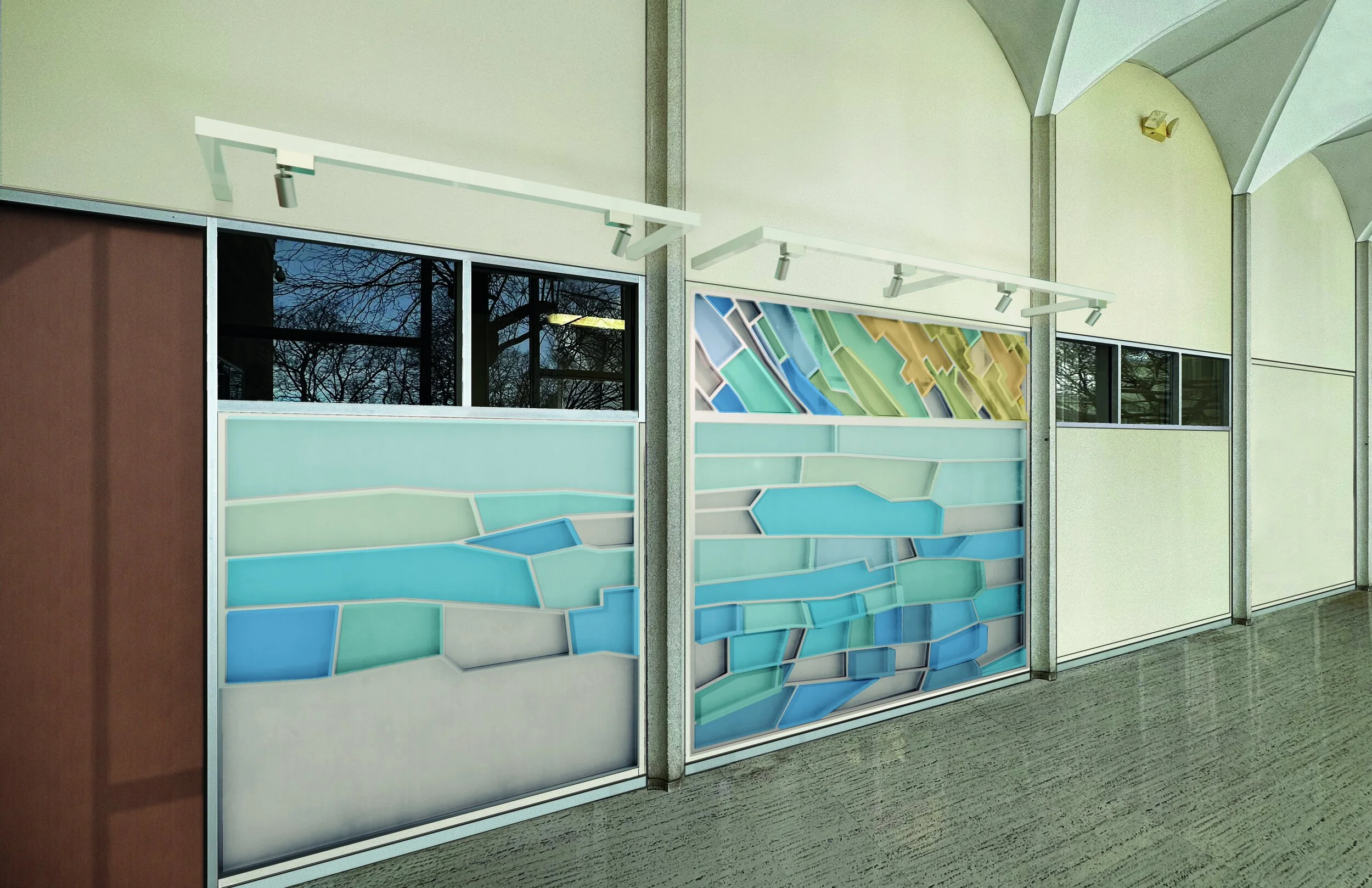
We presented four different concepts integrating the preferences established from the preferred precedents. The project team selected this concept to develop further.
After this round of concept drawings, we determined to only utilize one wall.
From Concept to Design Development
Once a concept is selected, we move into design development: the process of transforming an initial idea into a more complete and detailed design.
At this stage, we begin resolving the relationships between individual elements, including proportions, colors, typography, recognition categories, materials, and lighting.
For North Shore Congregation Israel, a series of renderings allowed us to study the composition of the wall and refine the arrangement of the individual donor recognition blocks.
We incorporated actual donor names into the drawings to evaluate spacing, readability, and the relationship between recognition categories.
We also explored color variations, typography, and the integration of lighting to better understand how the finished installation would be experienced within the space.
Each round of development brought the design closer to its final form, balancing the congregation's preferences with the practical considerations of fabrication and installation.
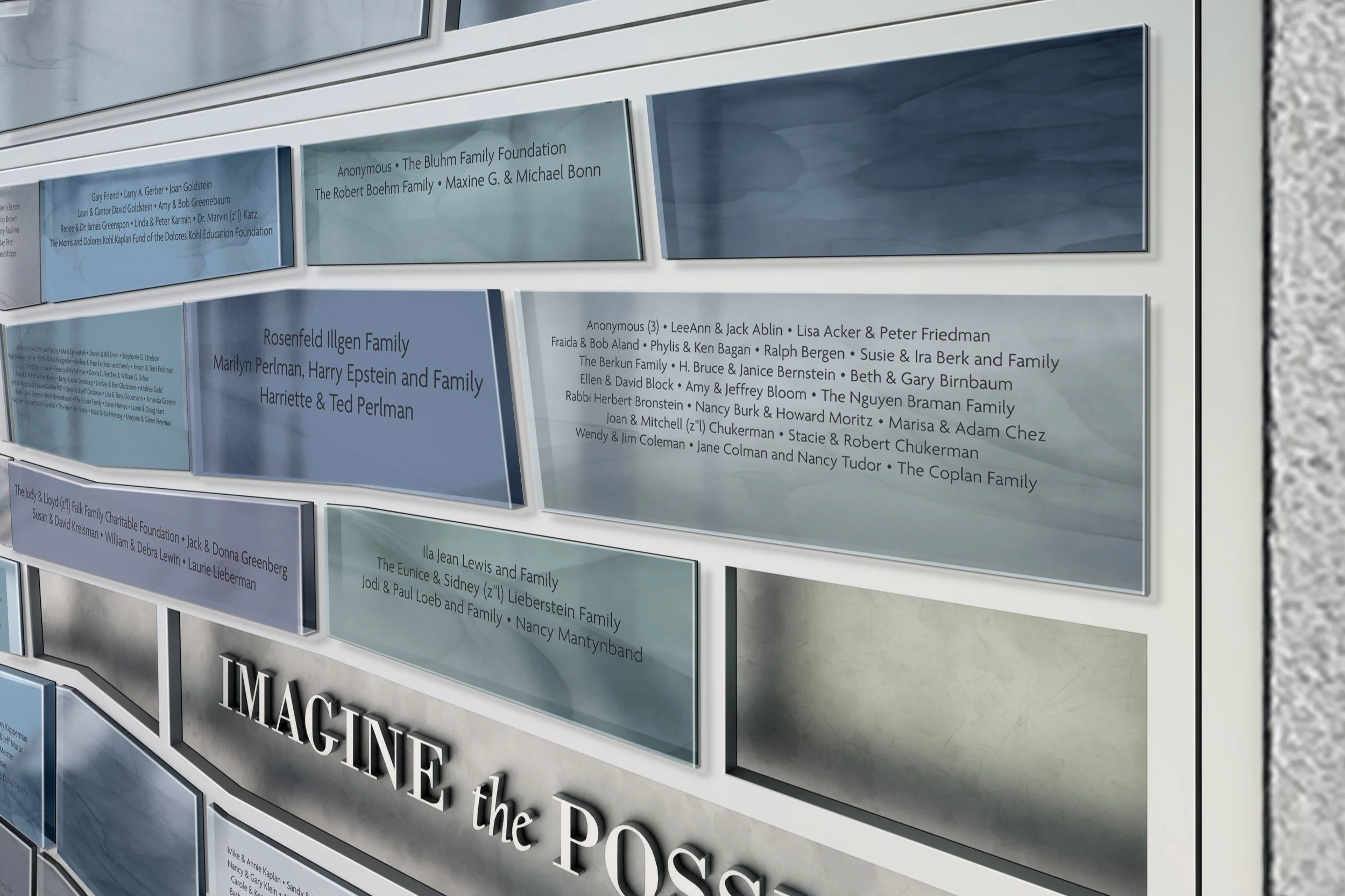
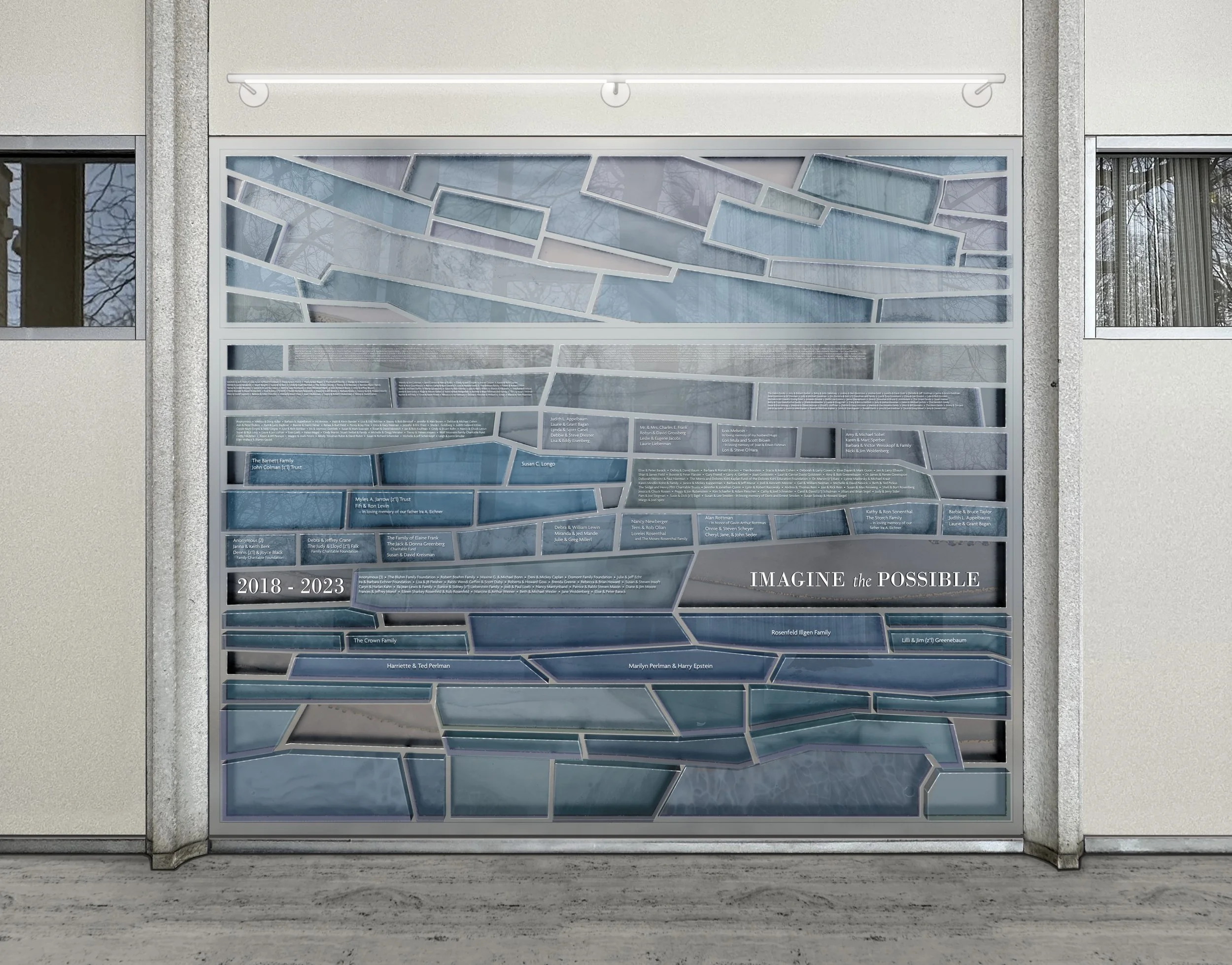
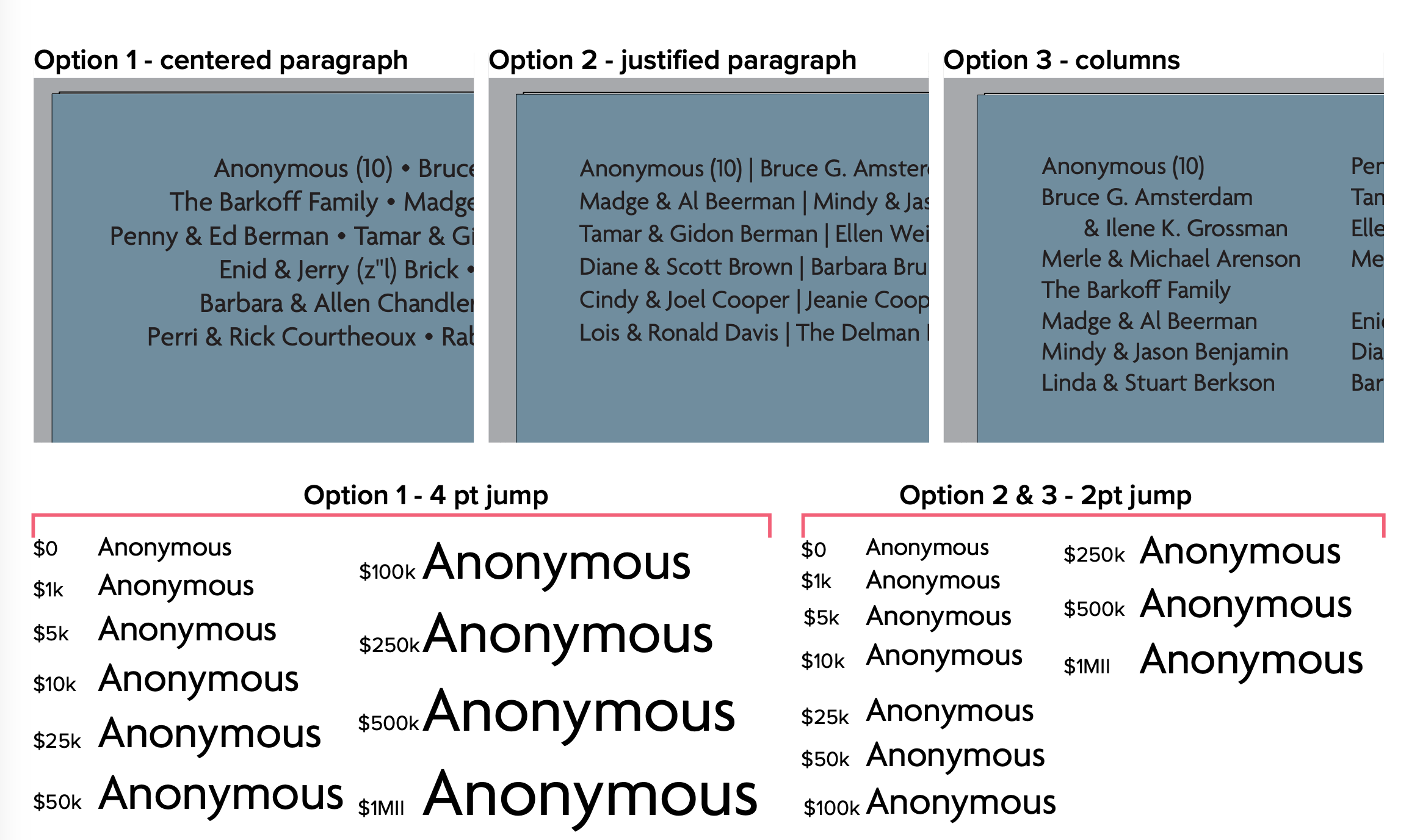
Selecting a concept allowed us to hone in on some of the key decision points as we further developed this concept. Through these drawings like these we were able to explore different ways of listing the names and other visual preferences for the wall as a whole.
Evaluating the Design at Full Scale
A design can look successful on a computer screen and feel very different when viewed at its actual size.
To evaluate the proposed installation, we produced a full-size print and reviewed it in the intended location.
This allowed us to assess typography, spacing, proportions, and the relationship between the recognition wall and the surrounding architecture.
The exercise led to additional refinements before the project moved forward.
Full-scale testing is a valuable step in our process because it allows us to make informed adjustments while changes are still relatively simple to implement.
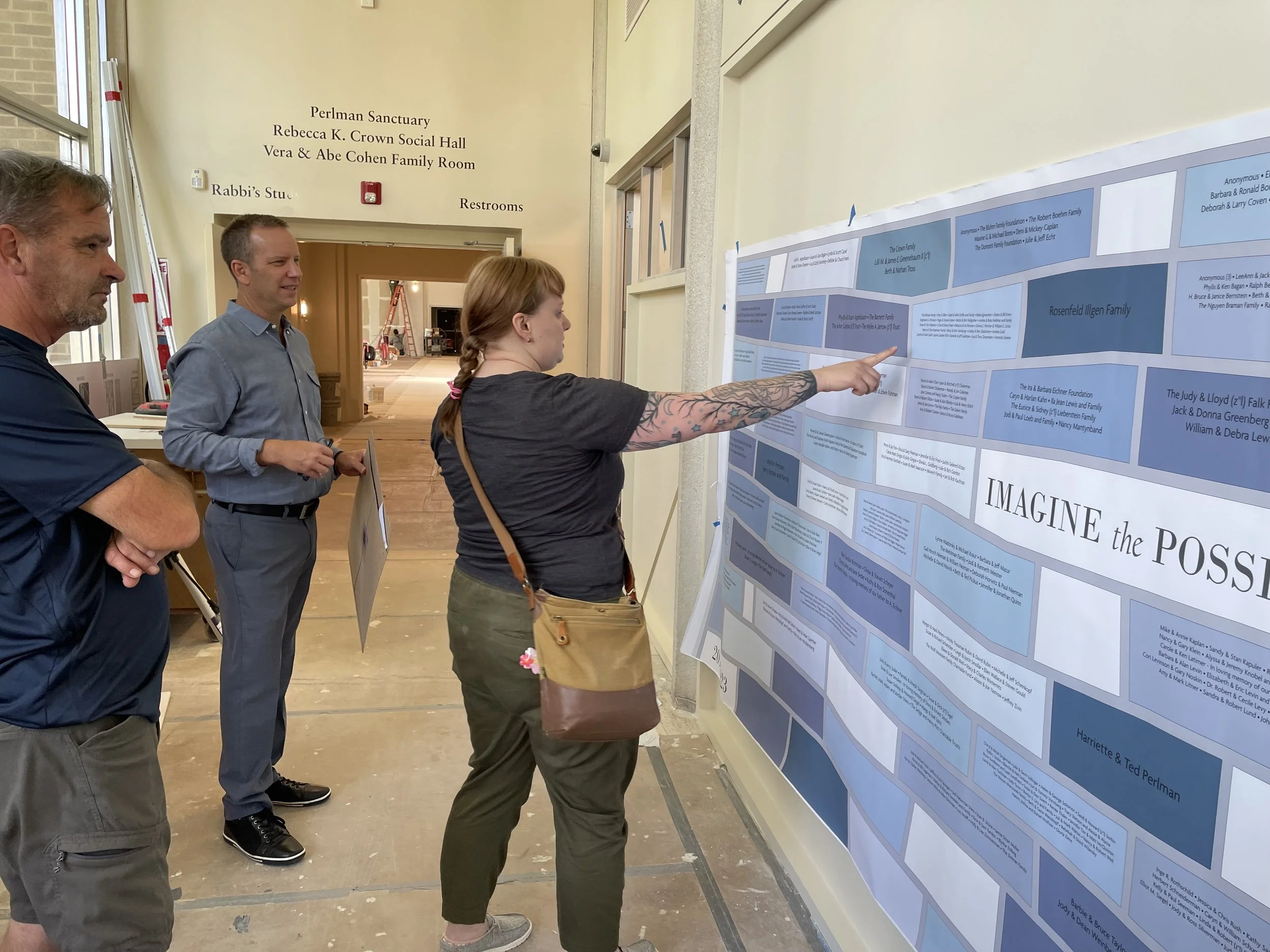
A full-size print allowed the project team to evaluate scale, typography, and composition in the actual space before approving the design.
Material Meets Method
Material selection is an important part of design, but choosing a material is only the beginning.
We consider how materials will look, feel, perform, and interact with one another. We also evaluate how they can be fabricated, finished, assembled, and maintained over time.
For North Shore Congregation Israel, the selected design incorporated custom cast resin recognition blocks within an aluminum framework.
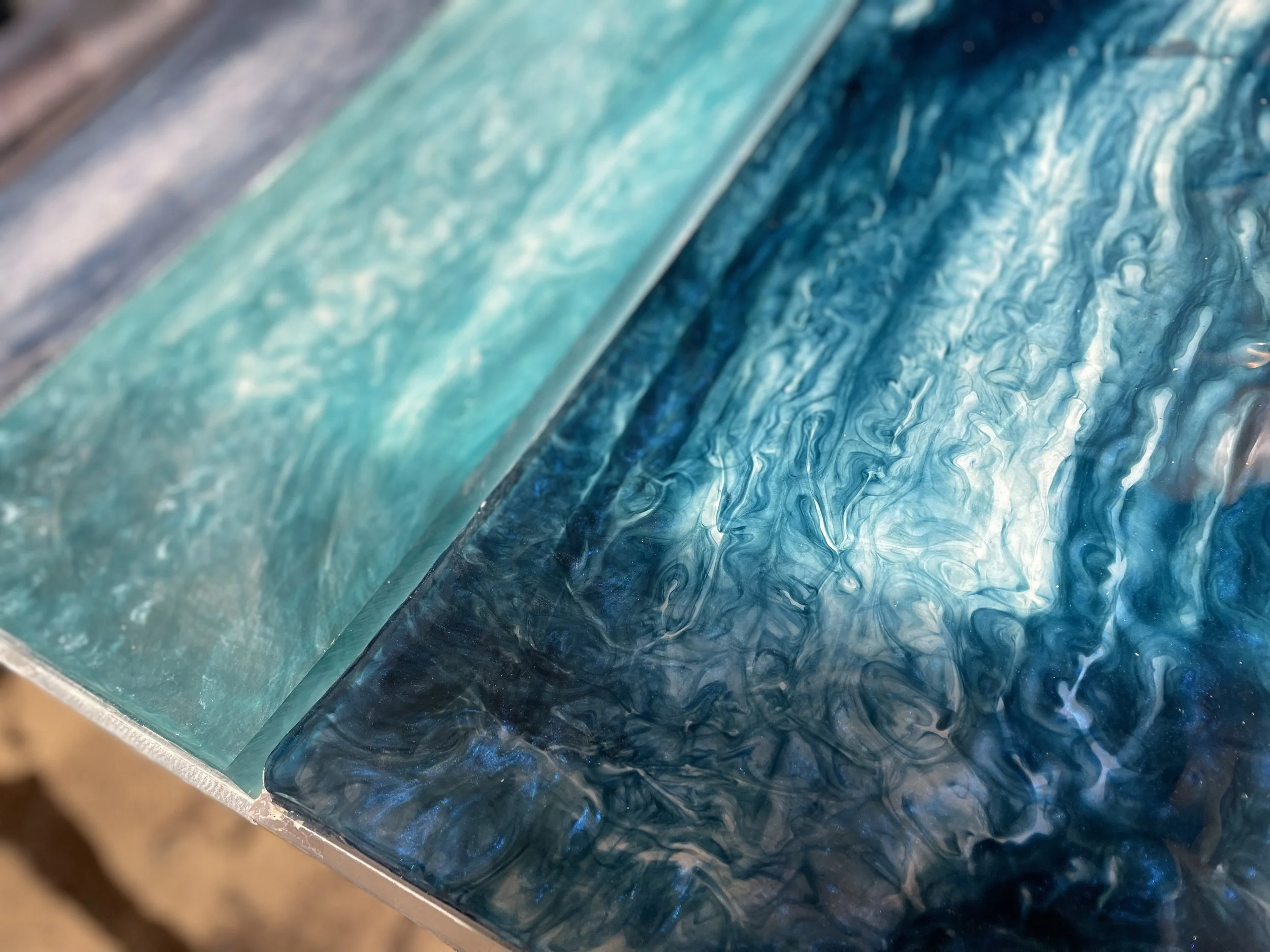
Achieving the desired appearance required extensive testing of color, translucency, surface finishes, engraving methods, and construction details.
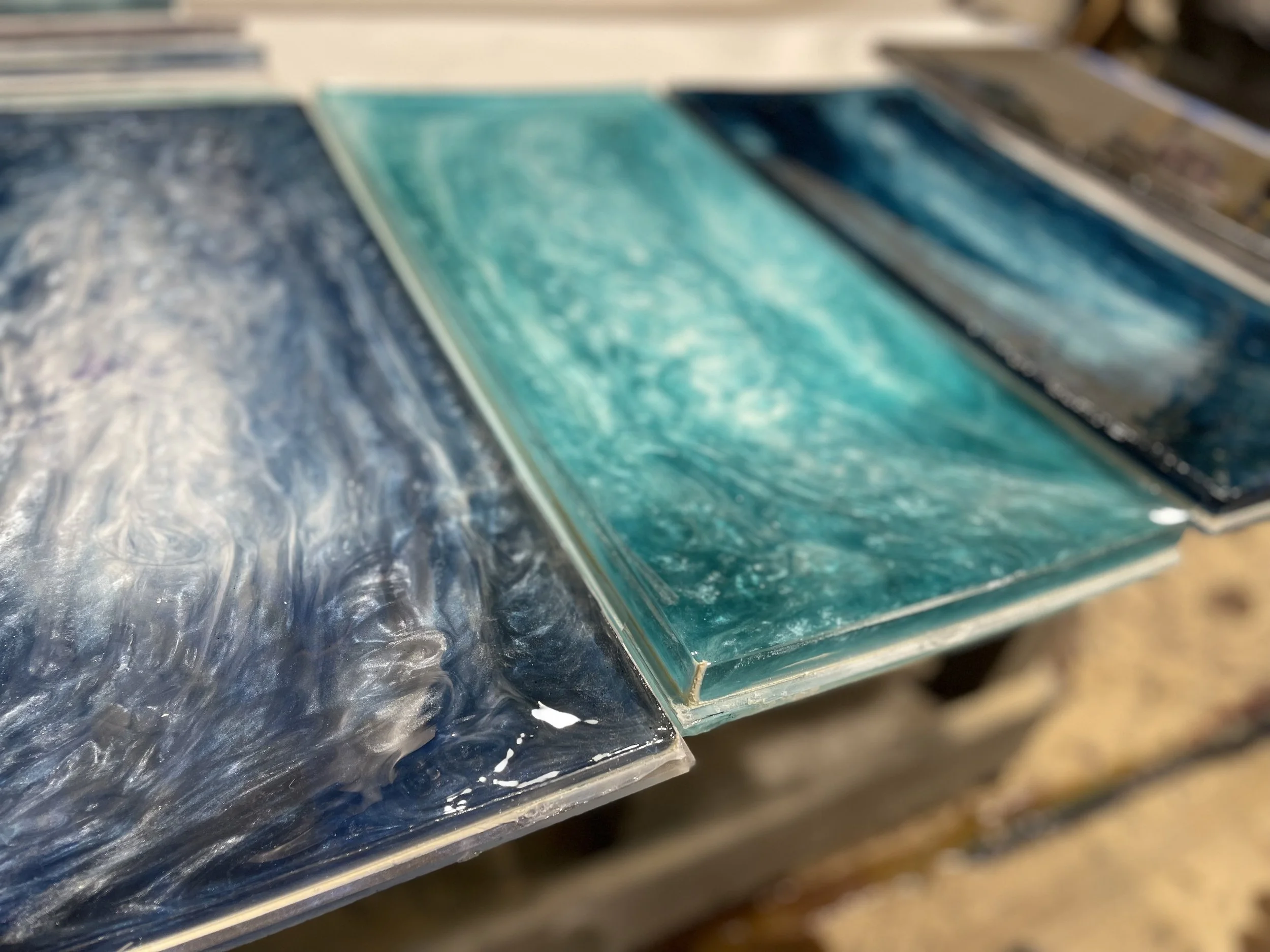
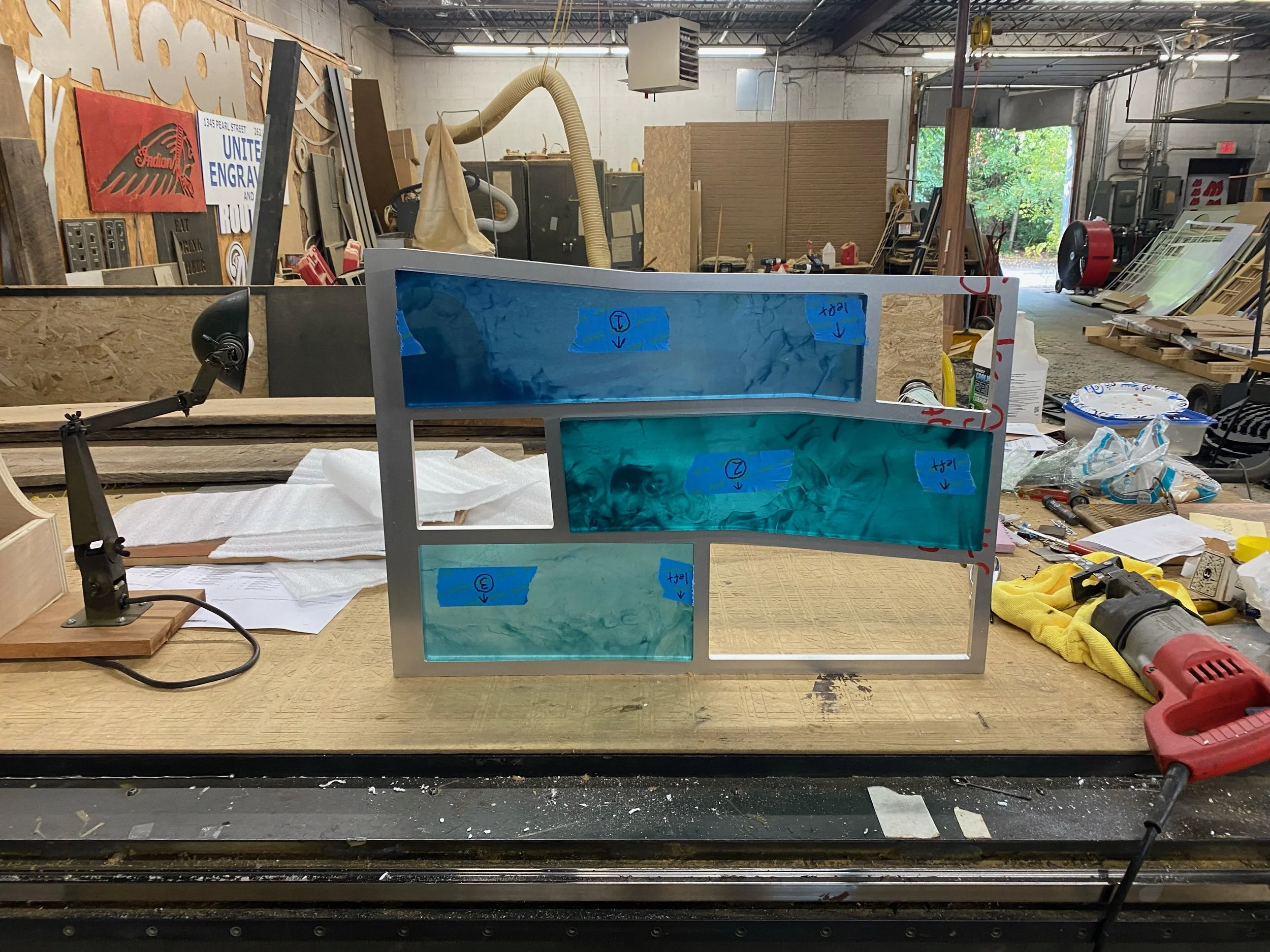
Developing the Resin
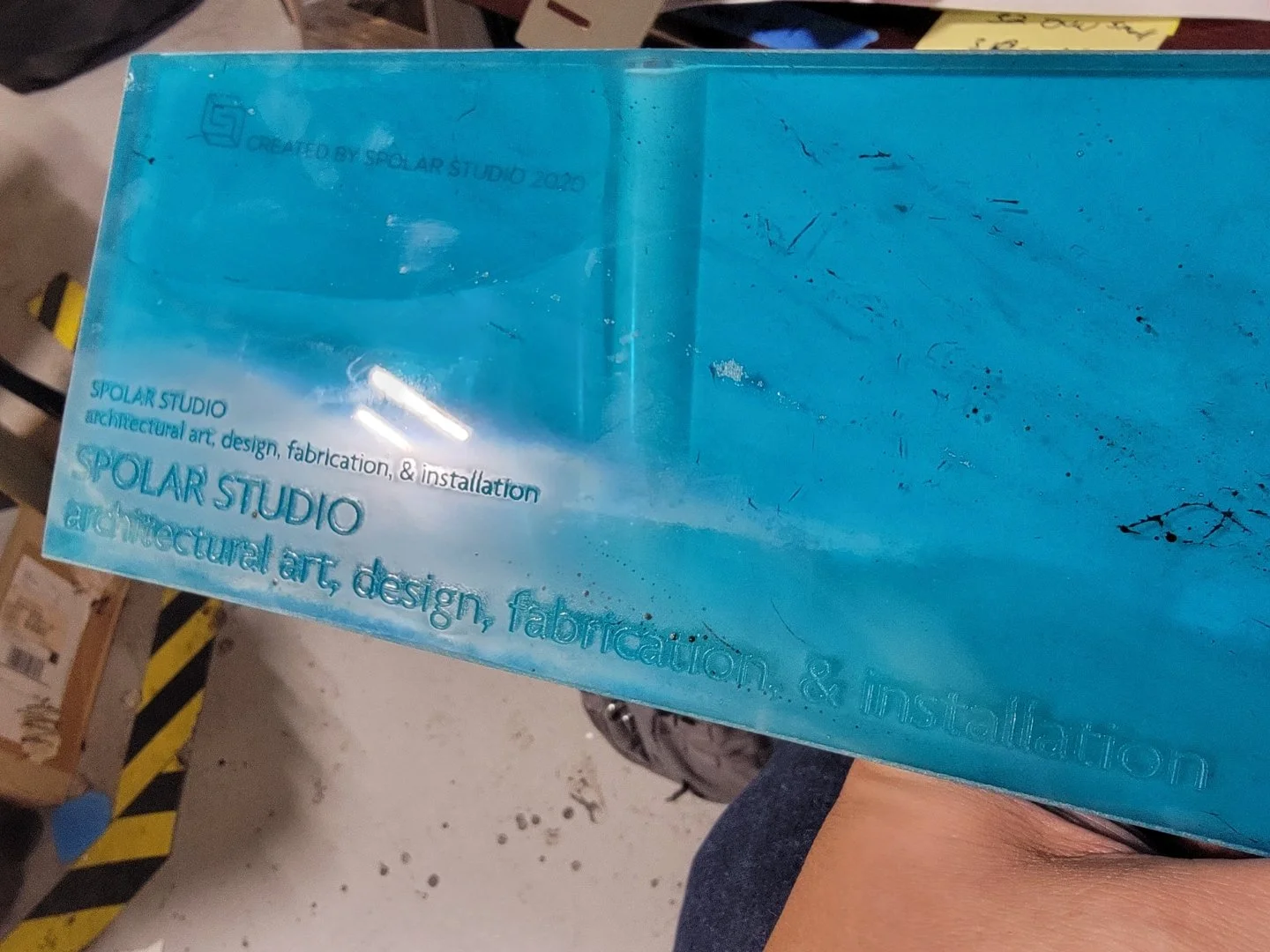
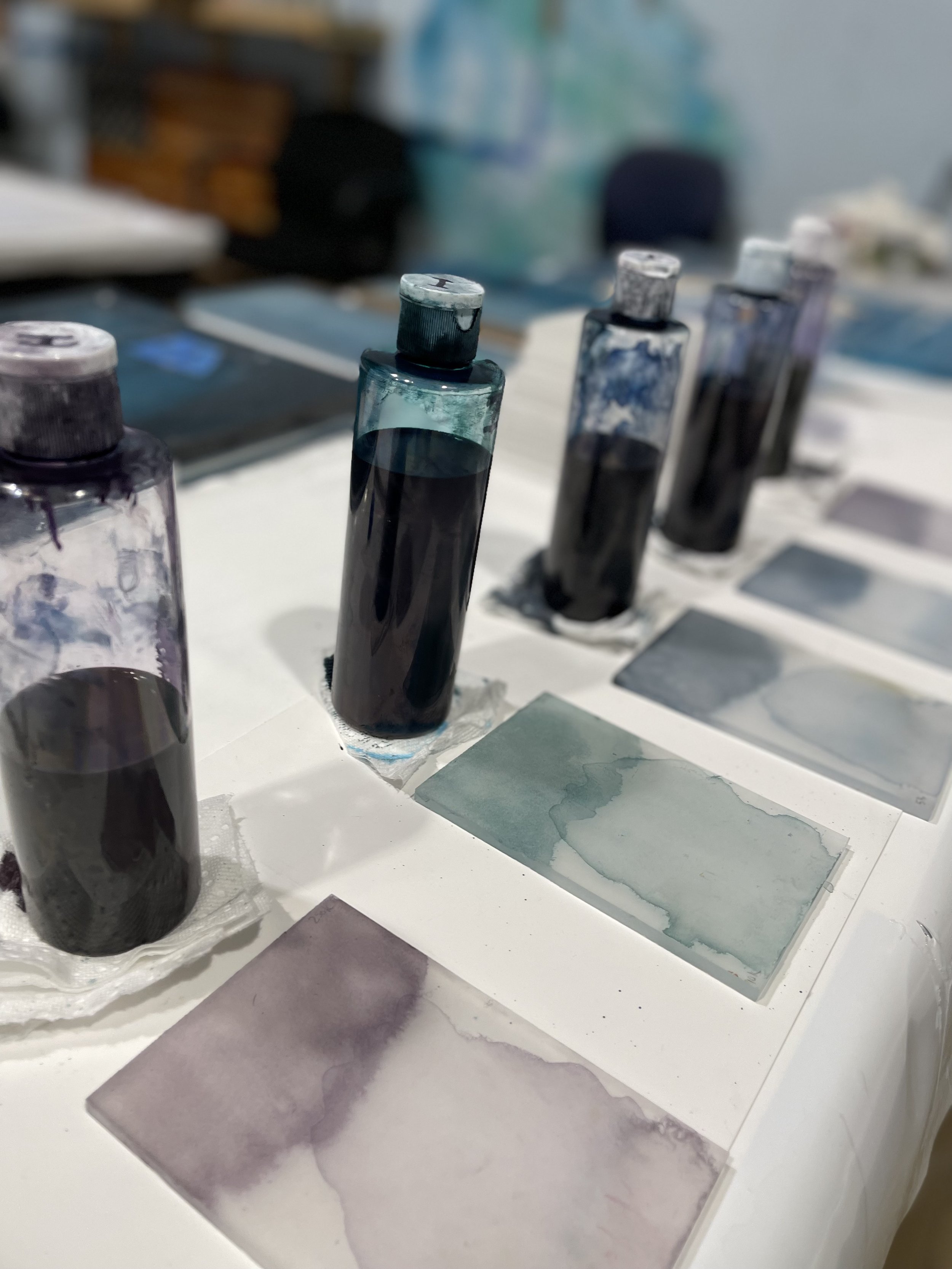
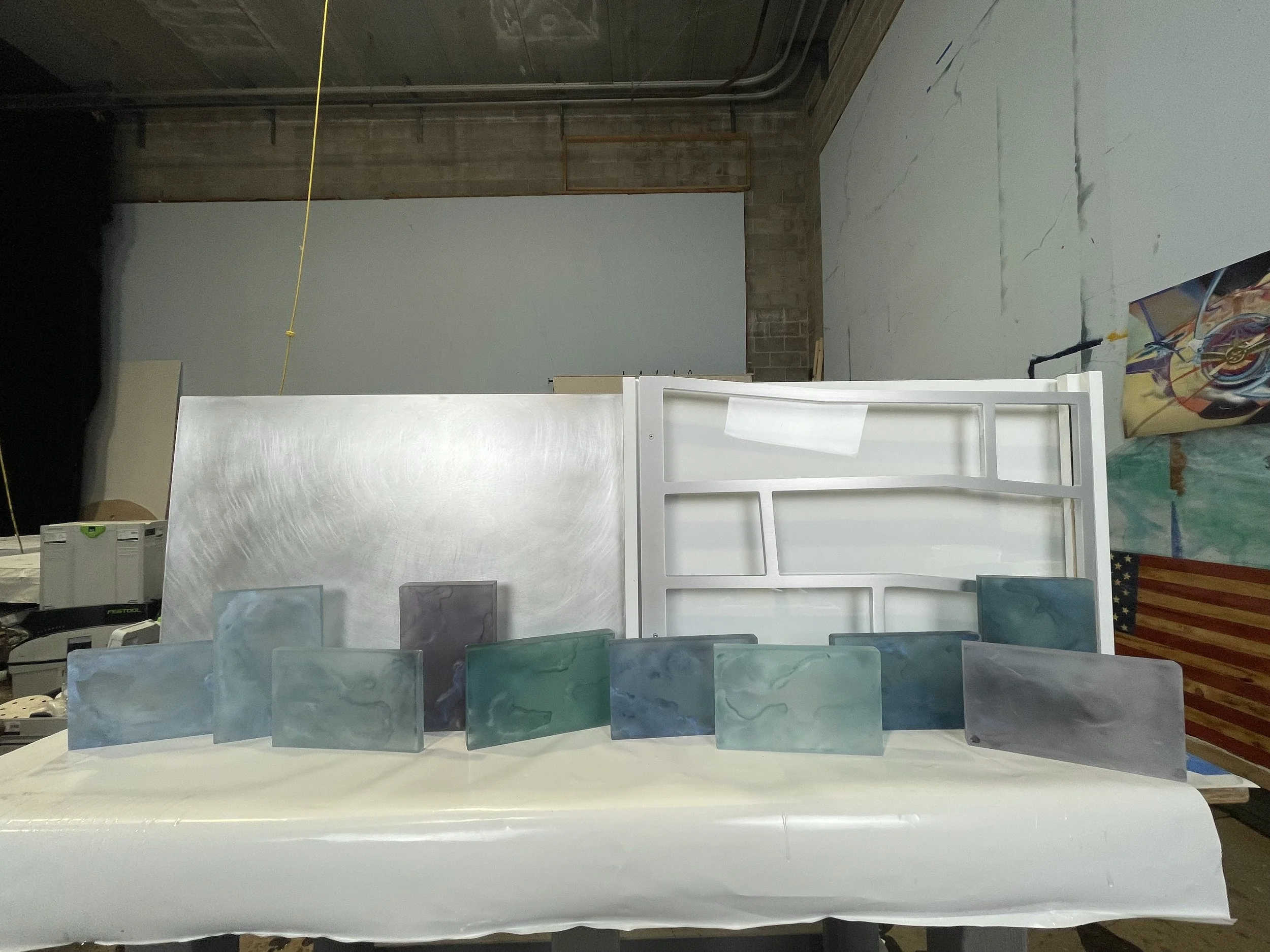
Our team began by producing sample resin pours to explore colors, translucency, and surface finishes that would complement the synagogue's architecture.
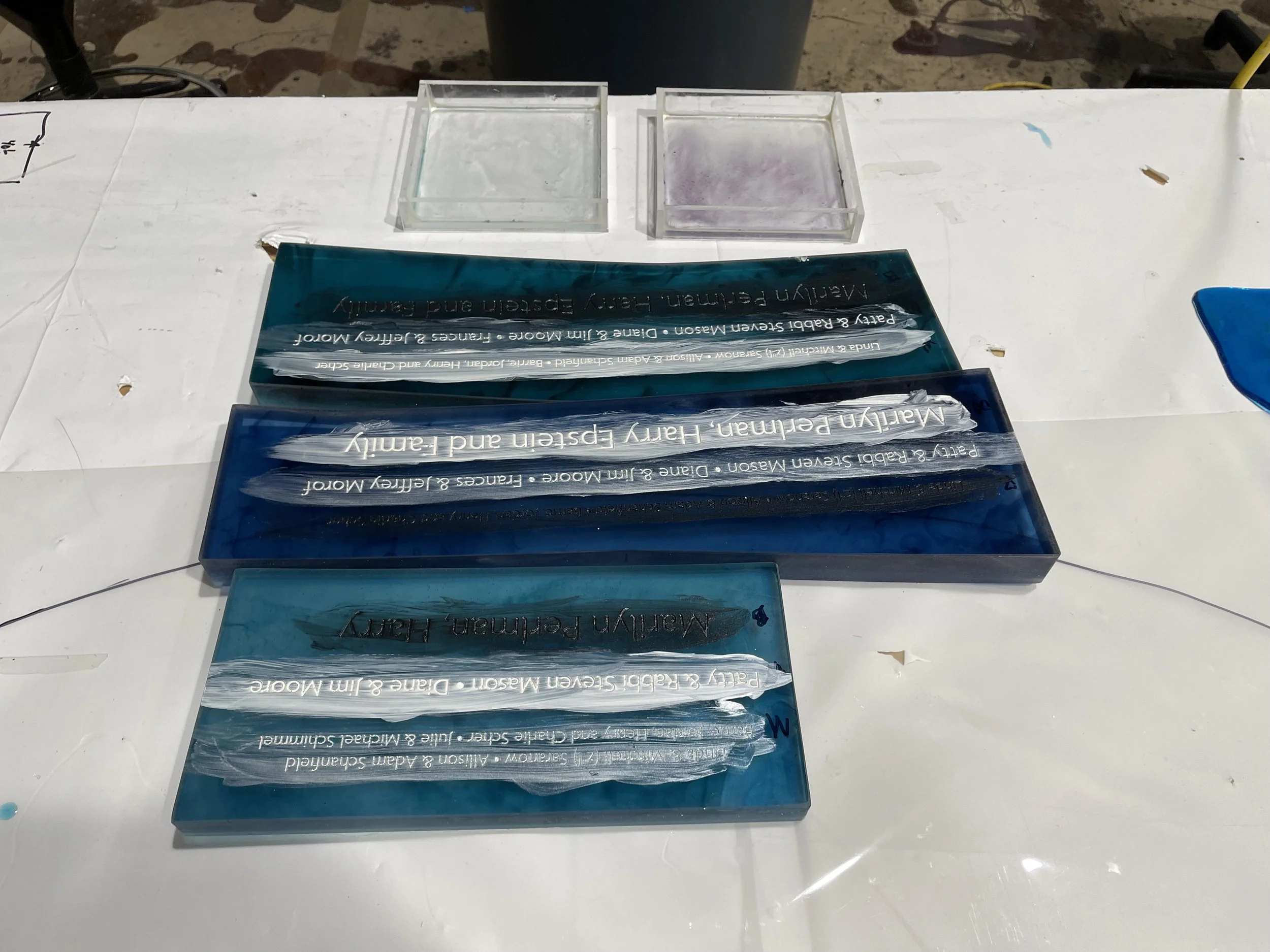
Because the resin would serve as the primary recognition material, we also tested laser engraving, lettering sizes, and color treatments to ensure donor names would be legible and visually consistent.
Digital color studies helped guide the process, while physical samples allowed us to evaluate how the materials appeared under actual lighting conditions.
Through successive rounds of testing and refinement, we established the final resin colors, finishes, and engraving specifications before moving into production.
Engineering the Framework
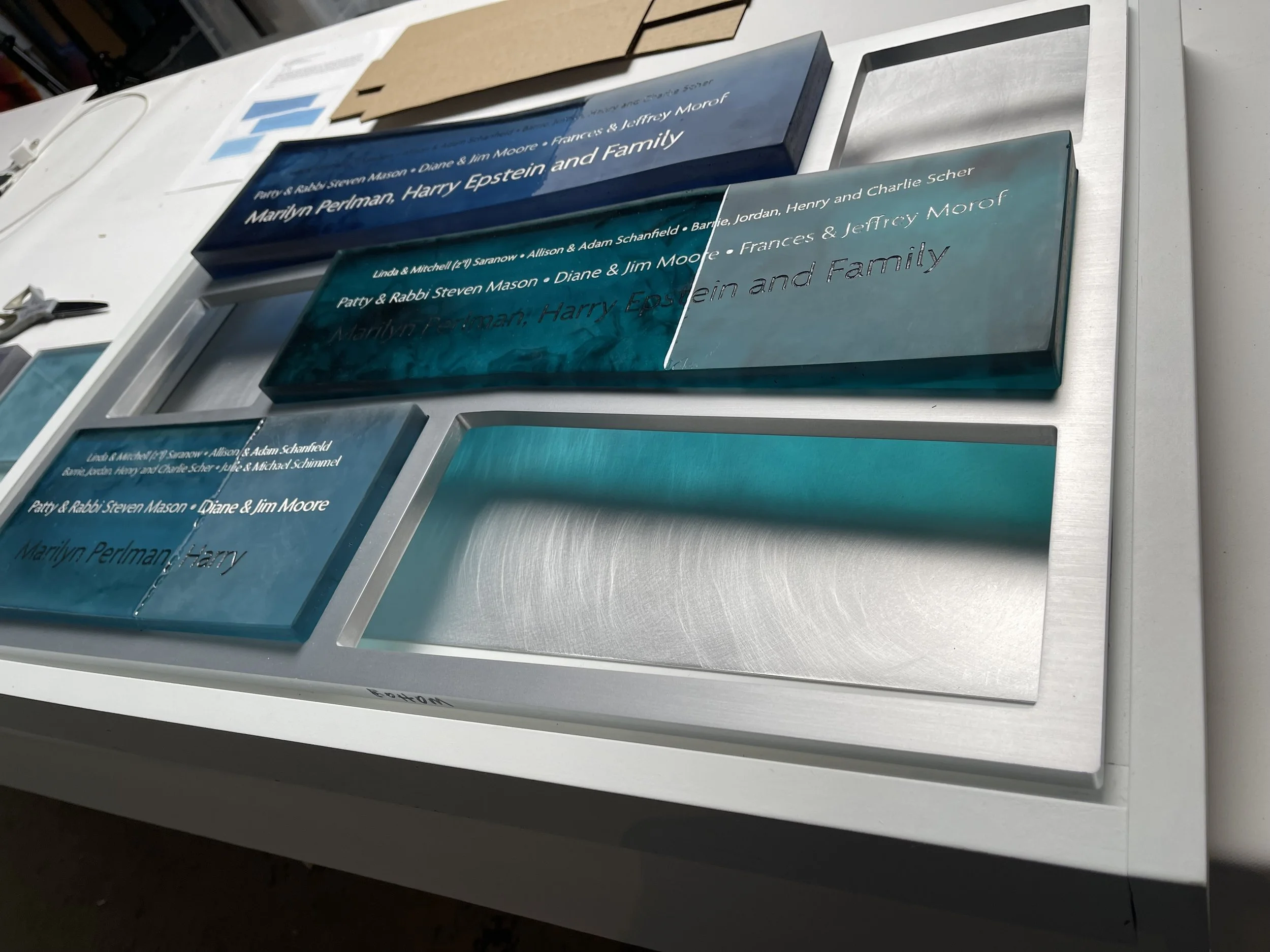
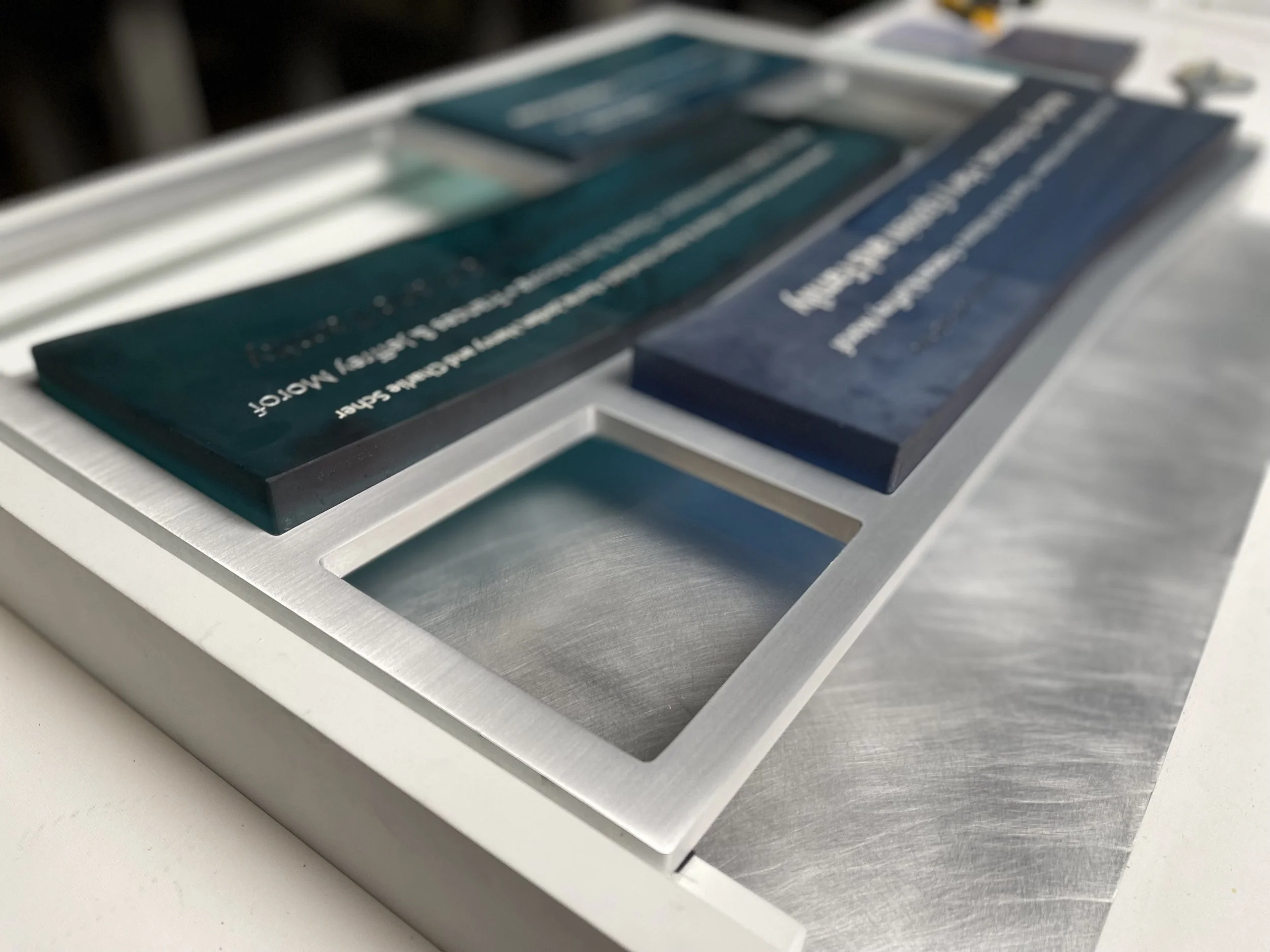
Alongside the resin development, we explored how the individual recognition blocks would be supported and organized within the aluminum framework.
Sample components were CNC cut and assembled to evaluate fit, tolerances, and construction methods.
We also tested different aluminum frame and backer finishes, considering how each would affect the overall composition.
These early fabrication exercises allowed us to evaluate the relationship between materials and identify potential challenges before moving into full production.
Why We Make Samples
Physical samples are an important part of our process, allowing us to evaluate both the appearance of a design and the methods used to bring it to life.
For North Shore Congregation Israel, our first round of samples confirmed that the construction methods were working as intended. The aluminum framework, attachment methods, engraving size, and lettering color all performed well. However, seeing the resin in person revealed an opportunity to further refine the color palette.
We developed a second round of samples with adjusted resin colors, allowing the project team to evaluate the improvements before giving final approval.
This process demonstrates why sampling matters. It allows us to validate technical decisions while continuing to refine the design, resulting in a more cohesive and thoughtfully considered finished installation.

Curious about our materials and fabrication methods?

From Design to Fabrication
With the design and material specifications approved, our team began producing the individual components.
Fabrication is where the decisions made throughout the design process become tangible. Drawings, material samples, and construction details guide the work as our makers translate the approved design into physical elements.
Casting and Cutting the Resin
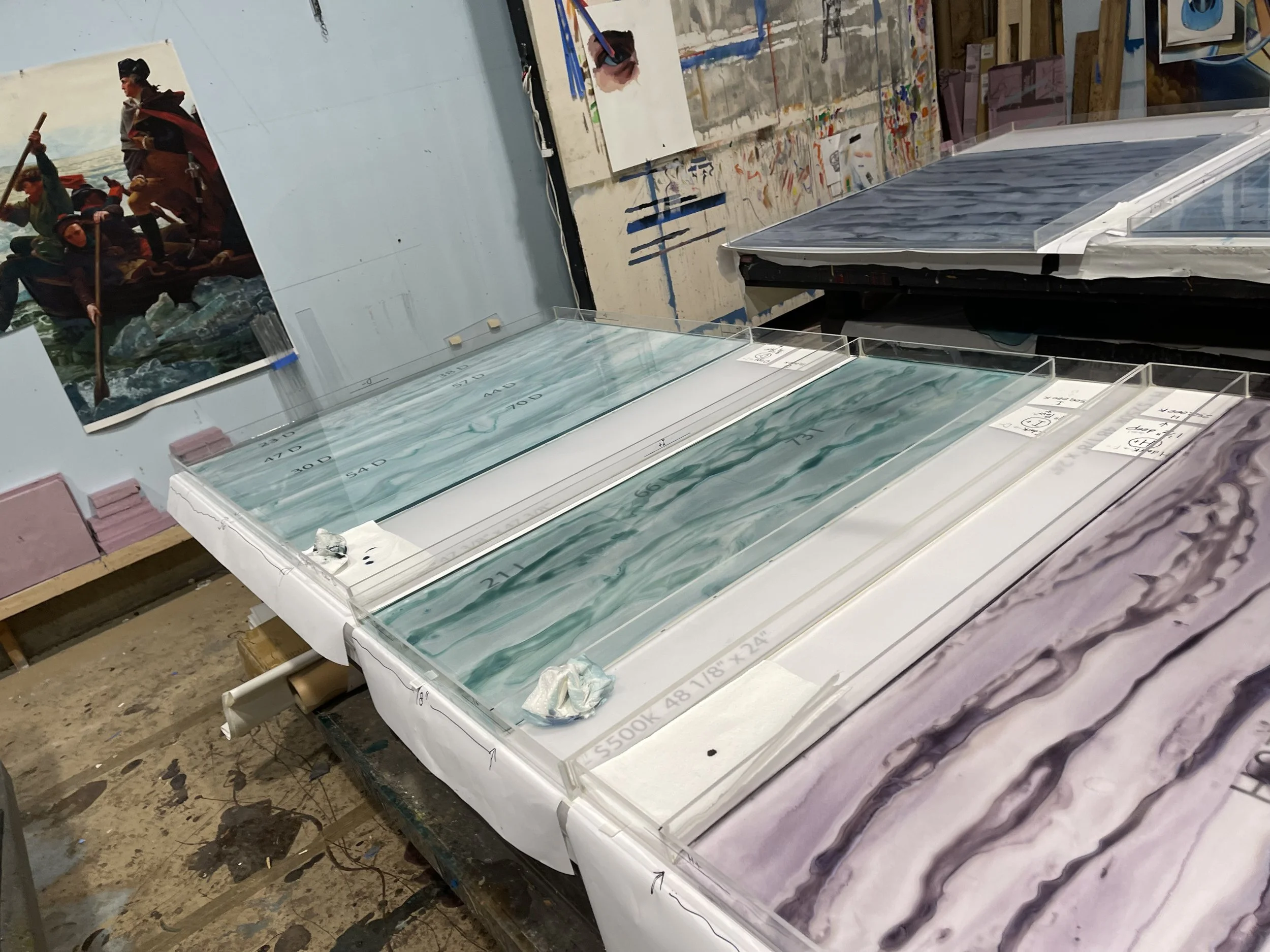
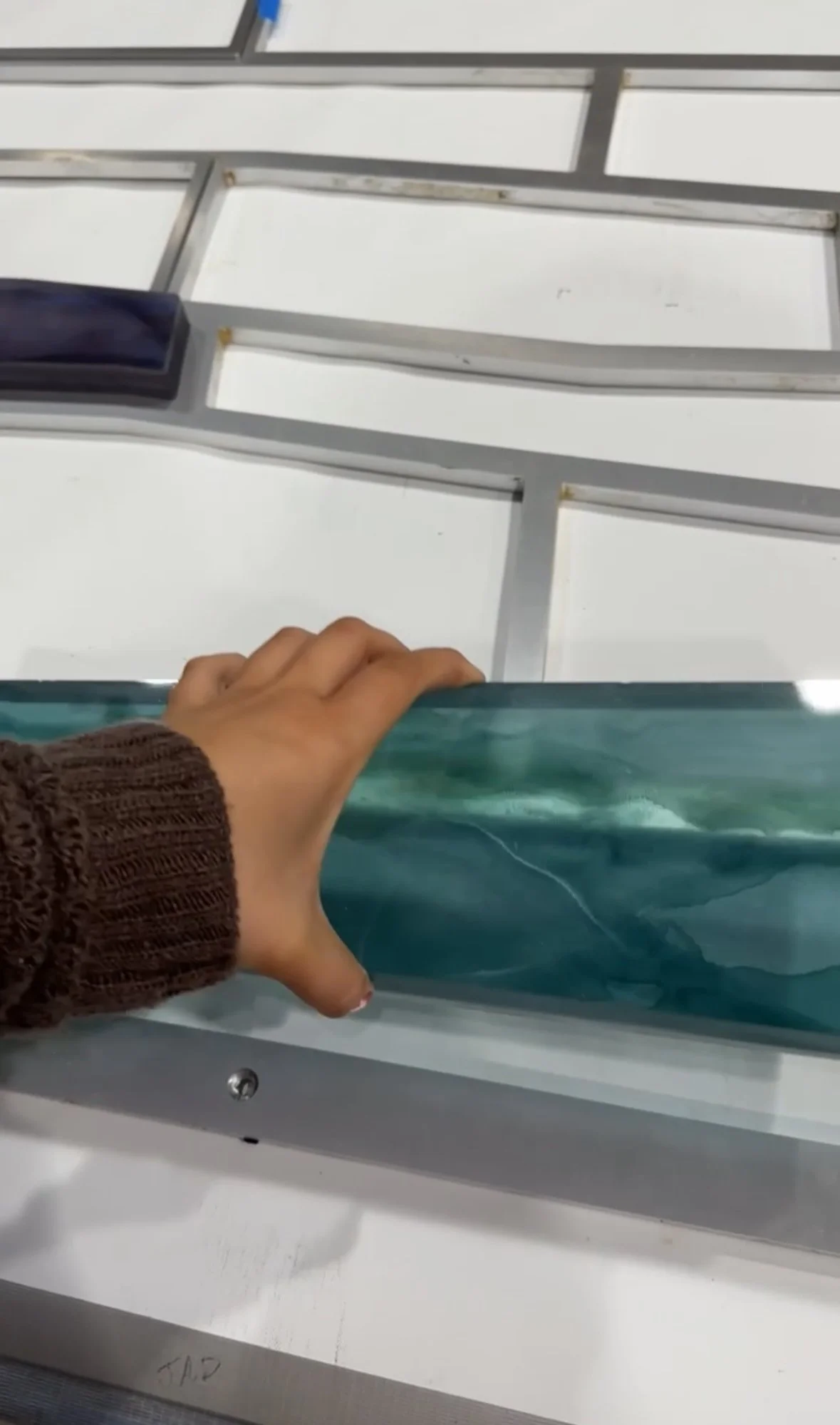
The custom resin was cast in larger trays before being CNC cut into the individual shapes required for the recognition wall.
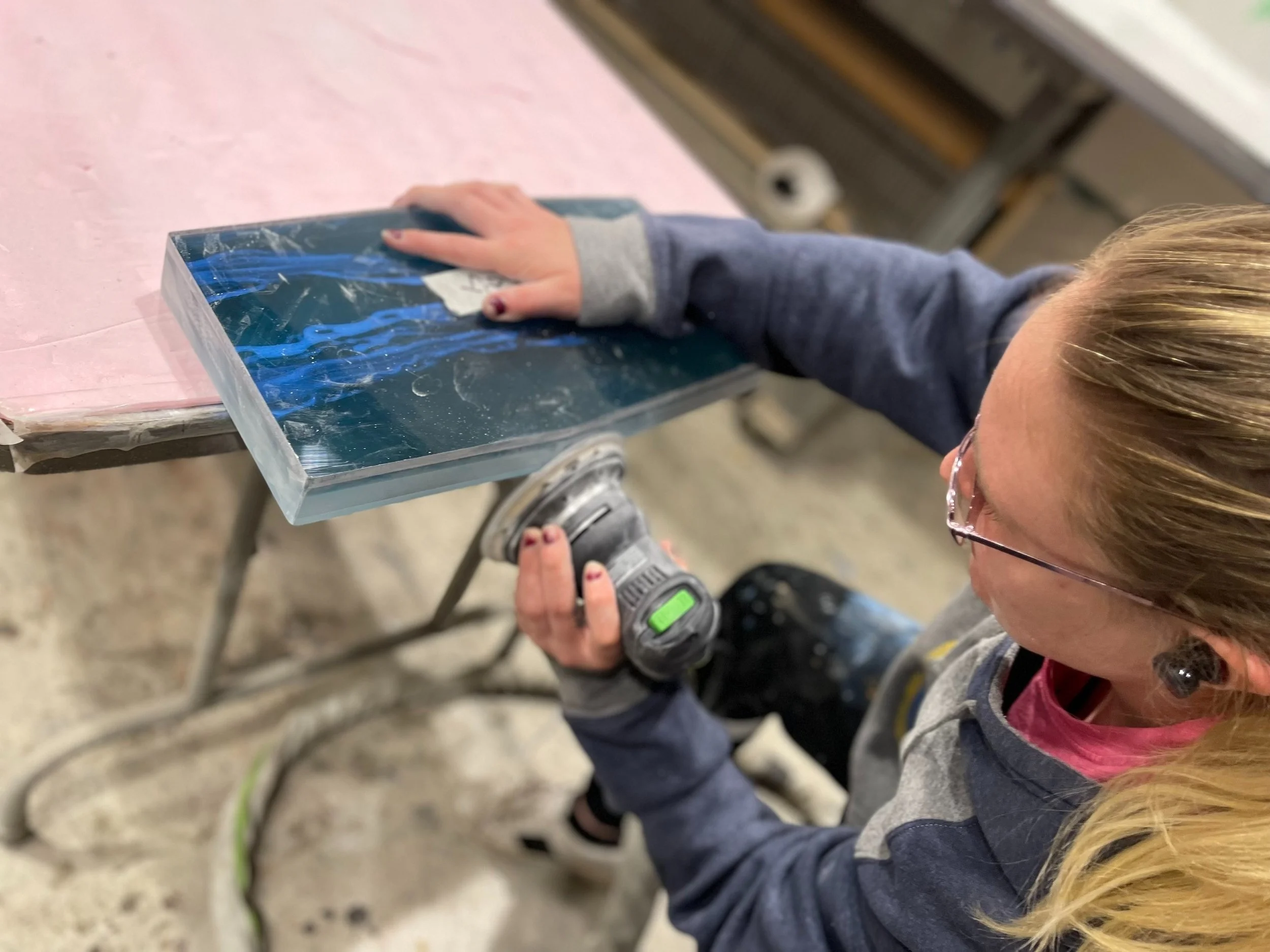
Each block was carefully prepared for engraving and finishing, with attention to maintaining consistent dimensions, colors, and surface quality across the different recognition categories.
Producing these components in-house allowed our team to maintain control over the materials and fabrication process, ensuring each piece met the approved design specifications.
Fabricating the Aluminum Framework
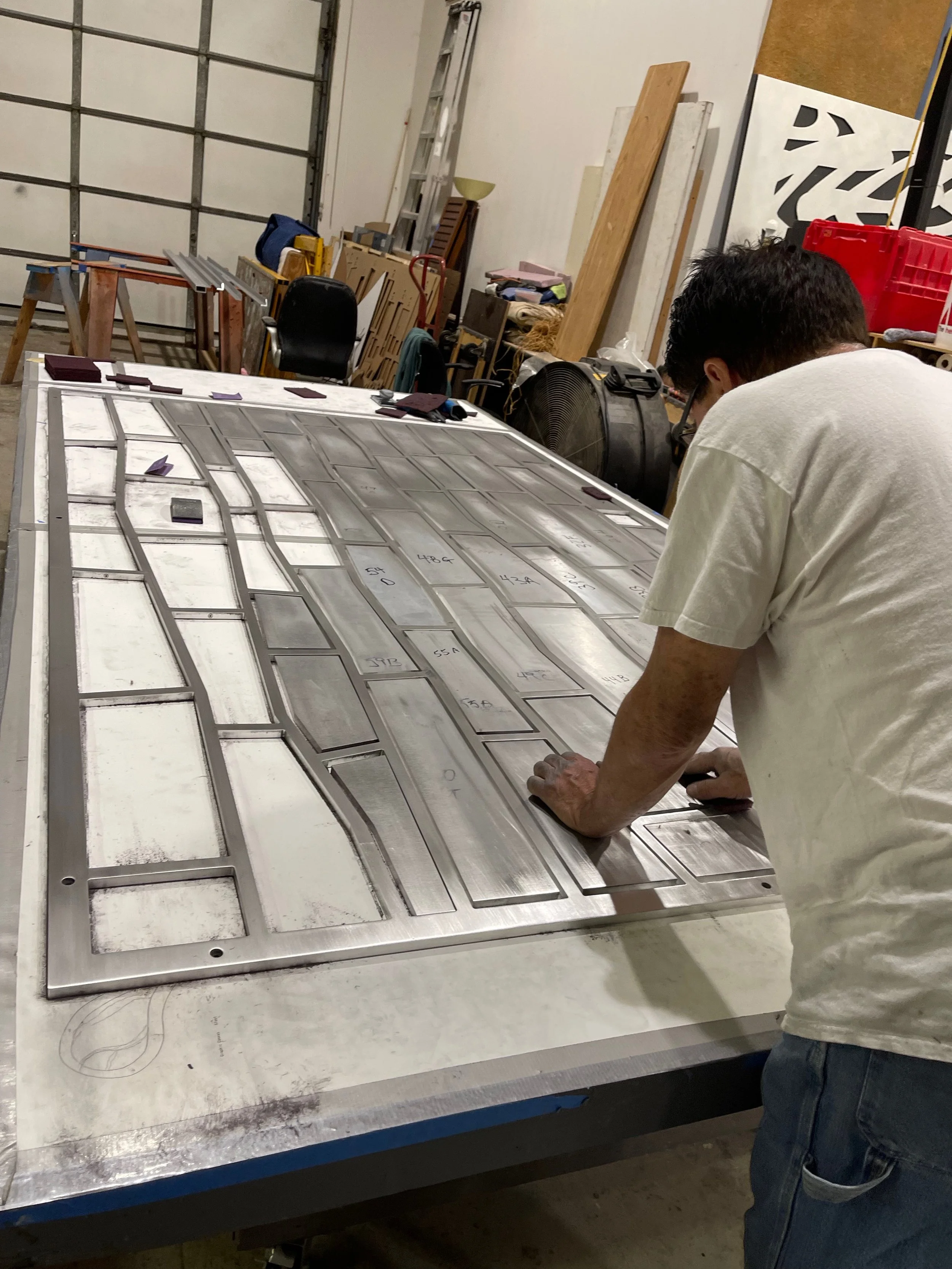
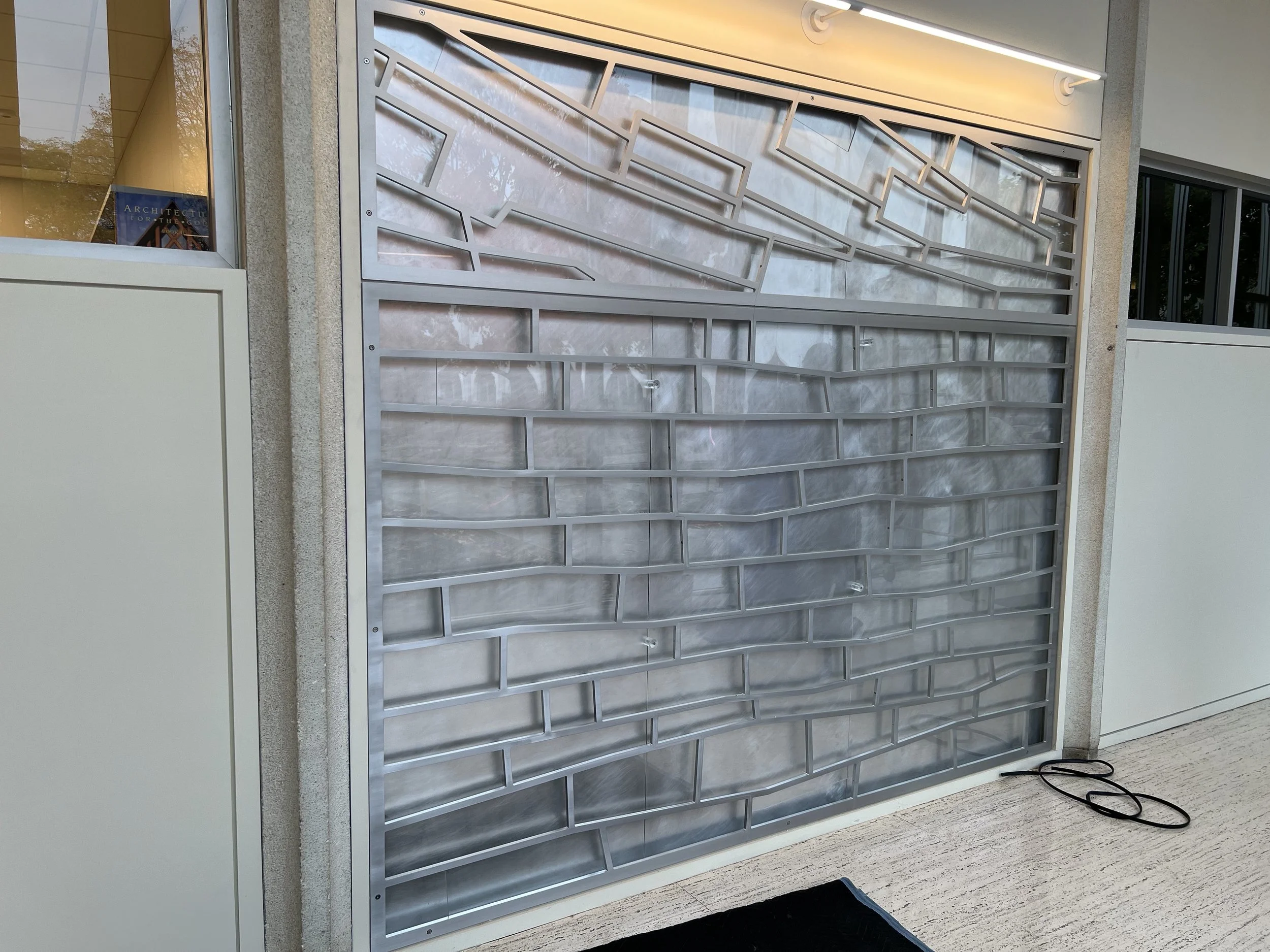
The custom aluminum framework was CNC cut in multiple sections to accommodate material size limitations. These sections were designed to fit together precisely as part of the larger installation.
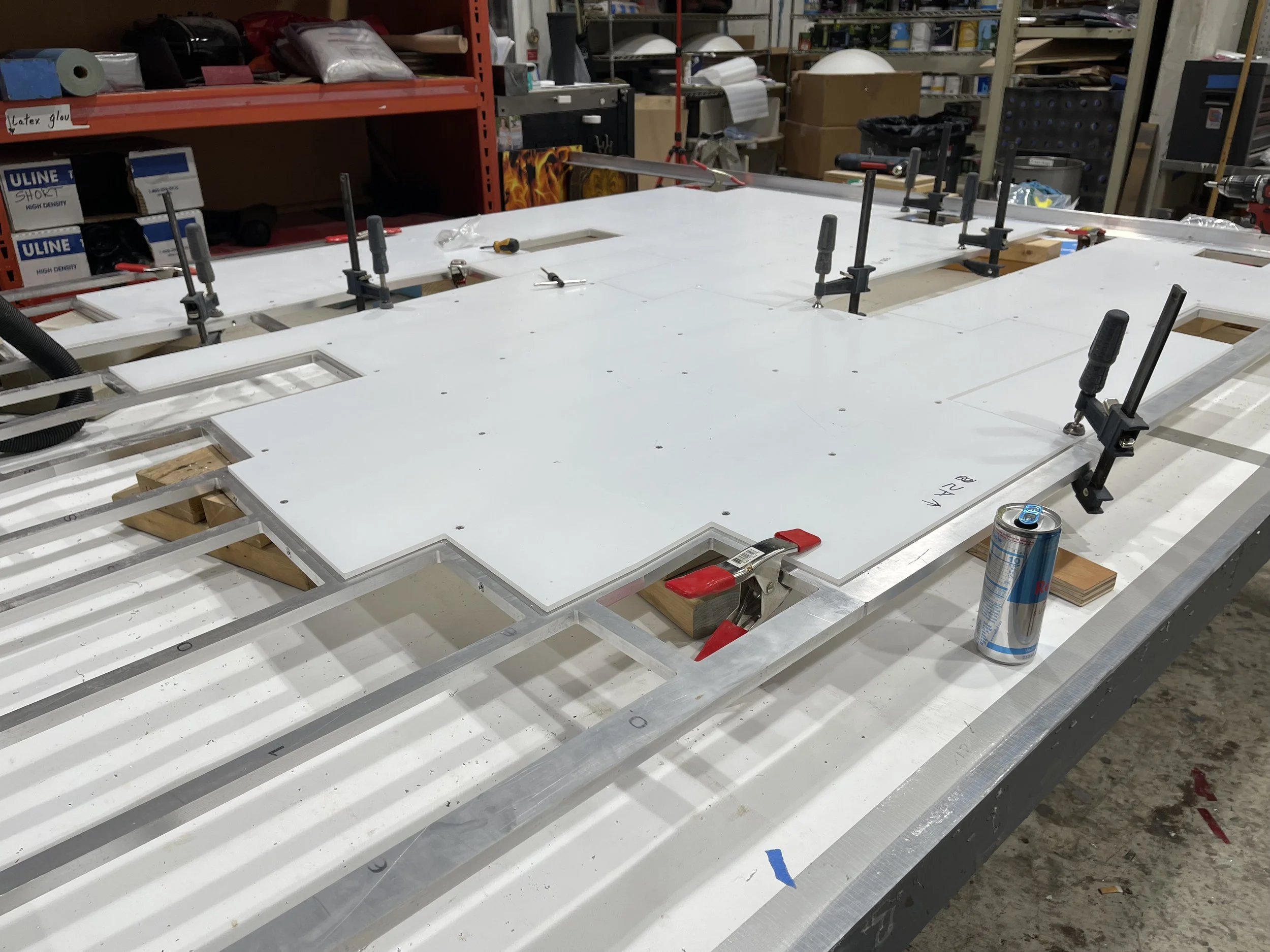
Acrylic backing components were also fabricated to help position and support the individual resin blocks within the framework.
Careful coordination between the aluminum, acrylic, and resin components ensured that the finished assembly would align properly and reflect the approved design.

The Details Matter
Donor recognition involves more than producing a beautiful installation. It also carries a responsibility to accurately recognize the individuals and families who have supported an organization.
Donor Name Proofing
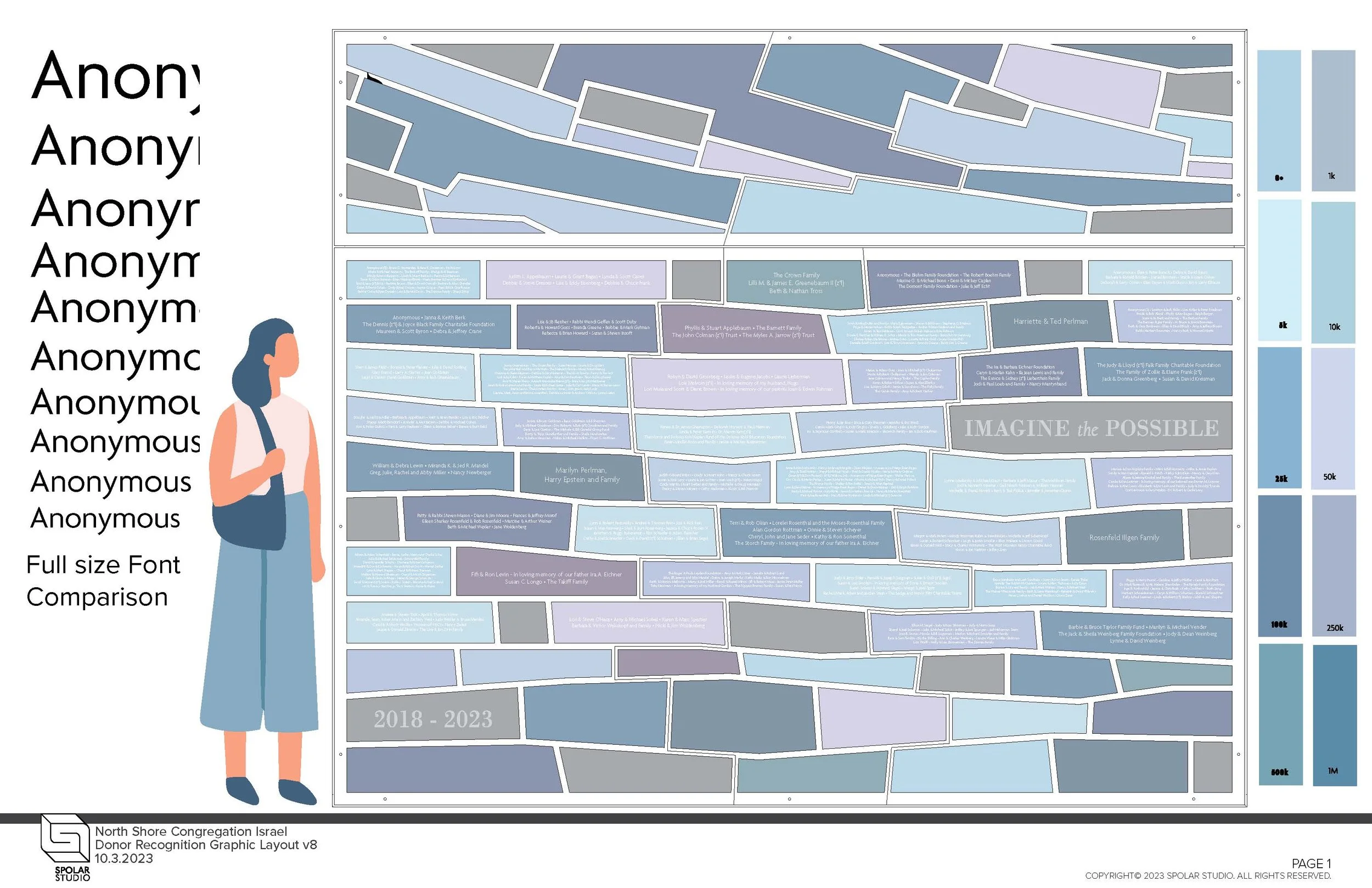
Before engraving, we worked through a collaborative proofing process to confirm donor names, recognition categories, and their organization within the wall.
Working with actual donor information throughout design development allowed us to anticipate spacing requirements and evaluate how names would fit within the individual recognition elements.
Final approval of the donor information was an essential step before production.
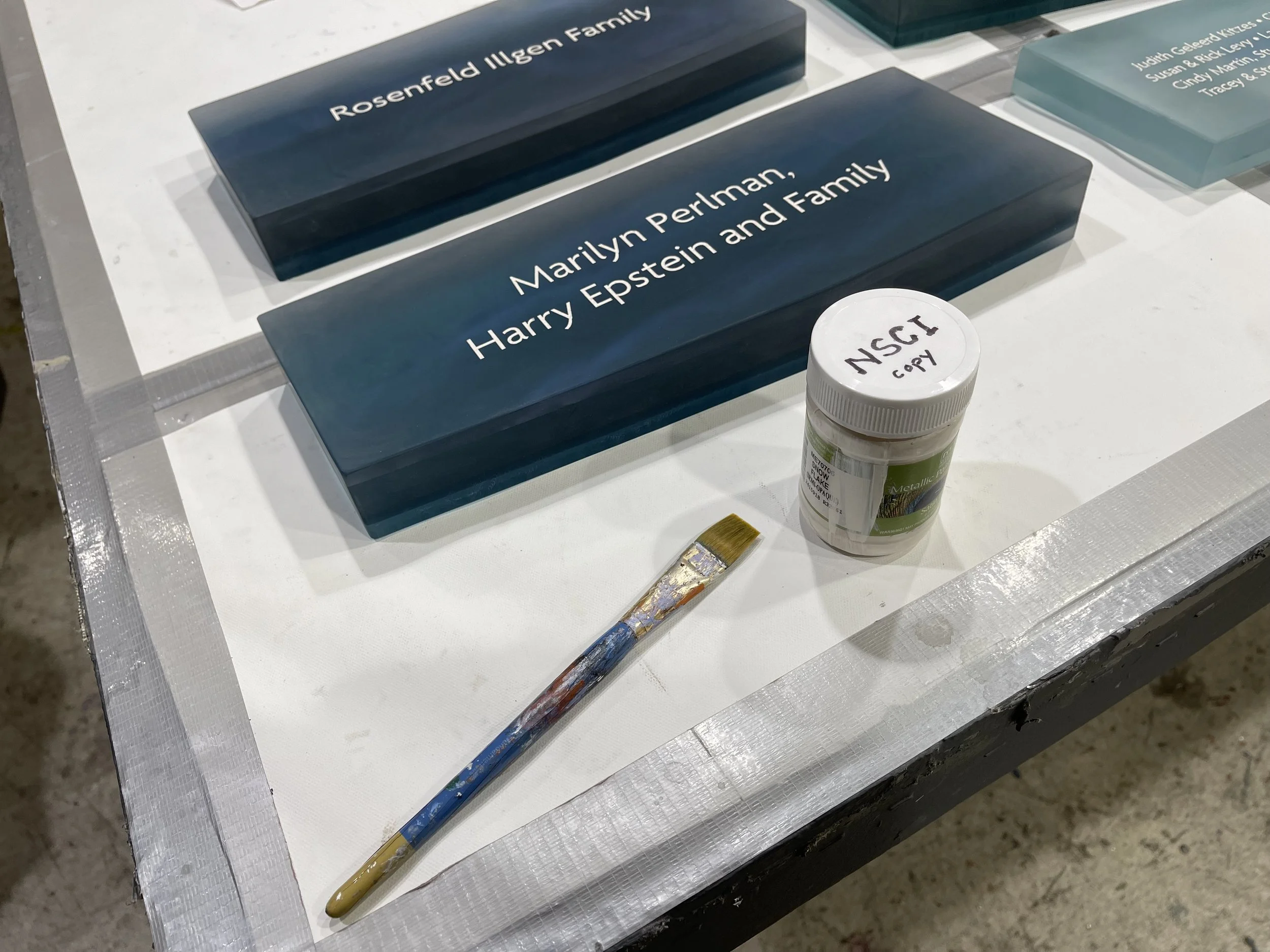
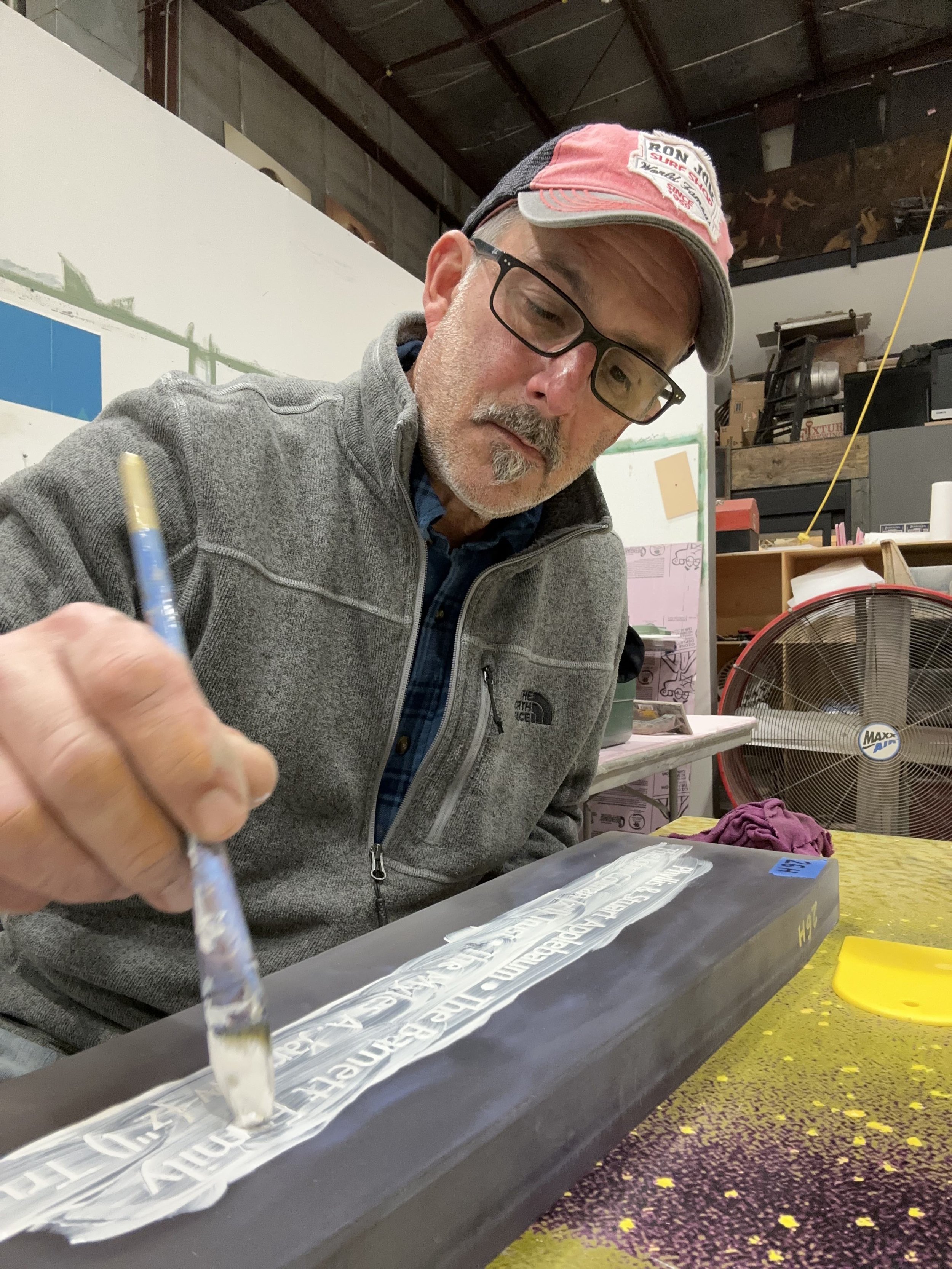
Once approved, the individual resin blocks were laser engraved and the lettering was finished with the selected color treatment.
Finishing and Assembly
With the components fabricated and engraved, we moved into final finishing and assembly.
The resin blocks received their approved surface finish, engraved lettering was completed, and the aluminum framework was prepared for installation.
Each component was evaluated as part of the larger composition, with attention to alignment, consistency, and fit.
These final steps bring together the visual and technical decisions made throughout the project, preparing the individual pieces to become one cohesive installation.
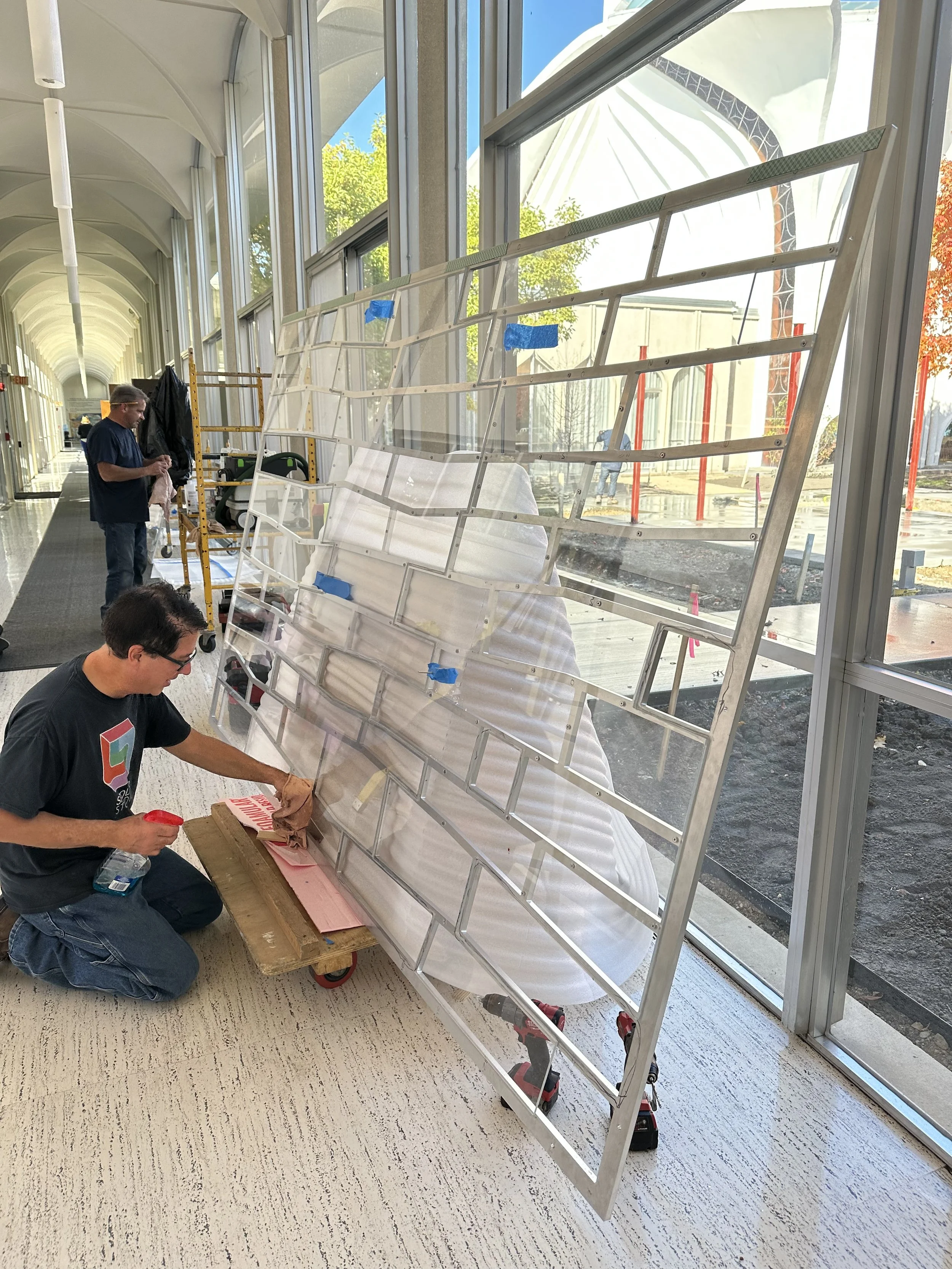
Designed for the Space.
Installed with Precision.
Installation is considered from the earliest stages of design, not after fabrication is complete.
Throughout the project, we evaluate how components will be transported, positioned, supported, and assembled within their intended space.
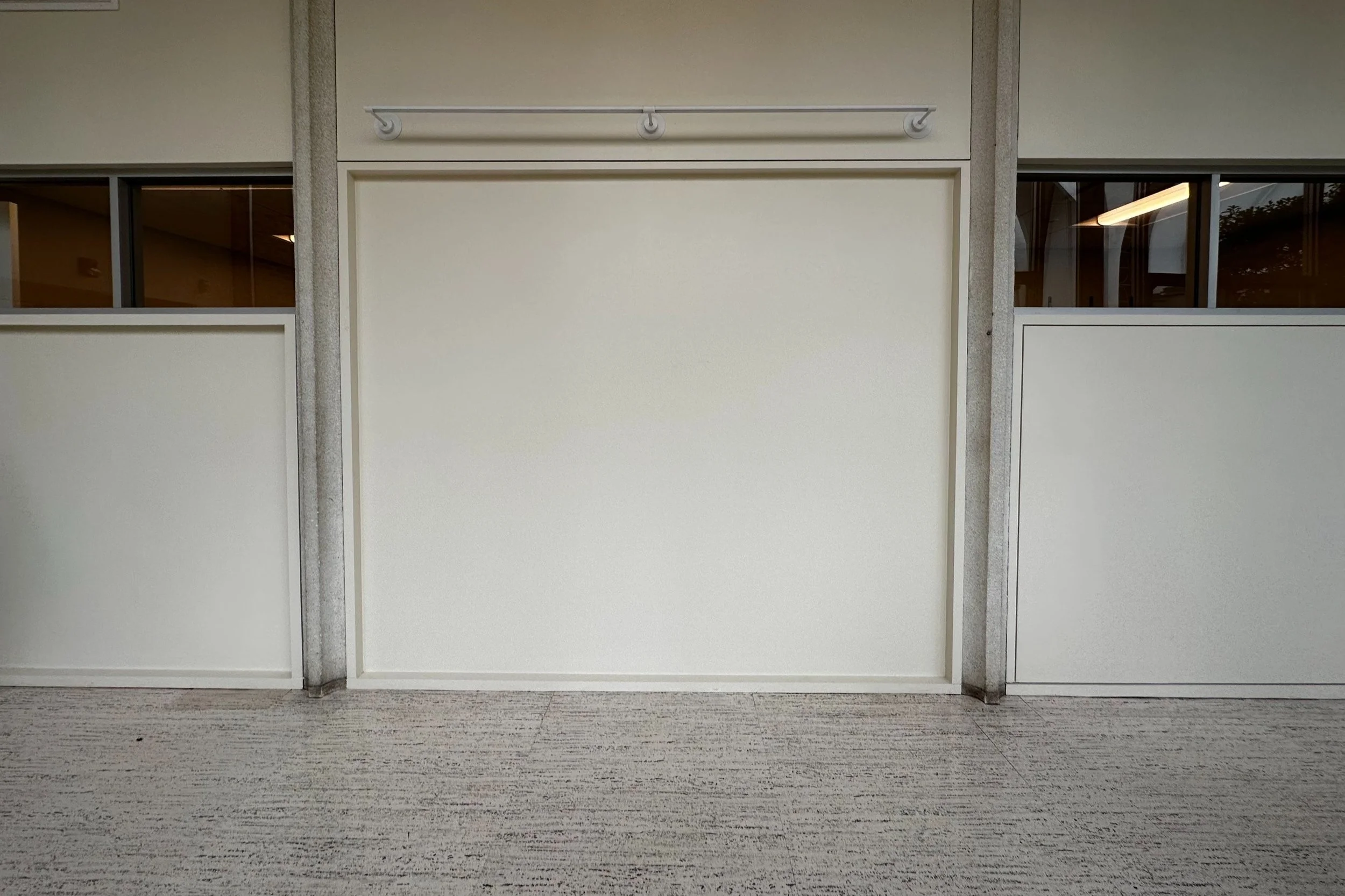
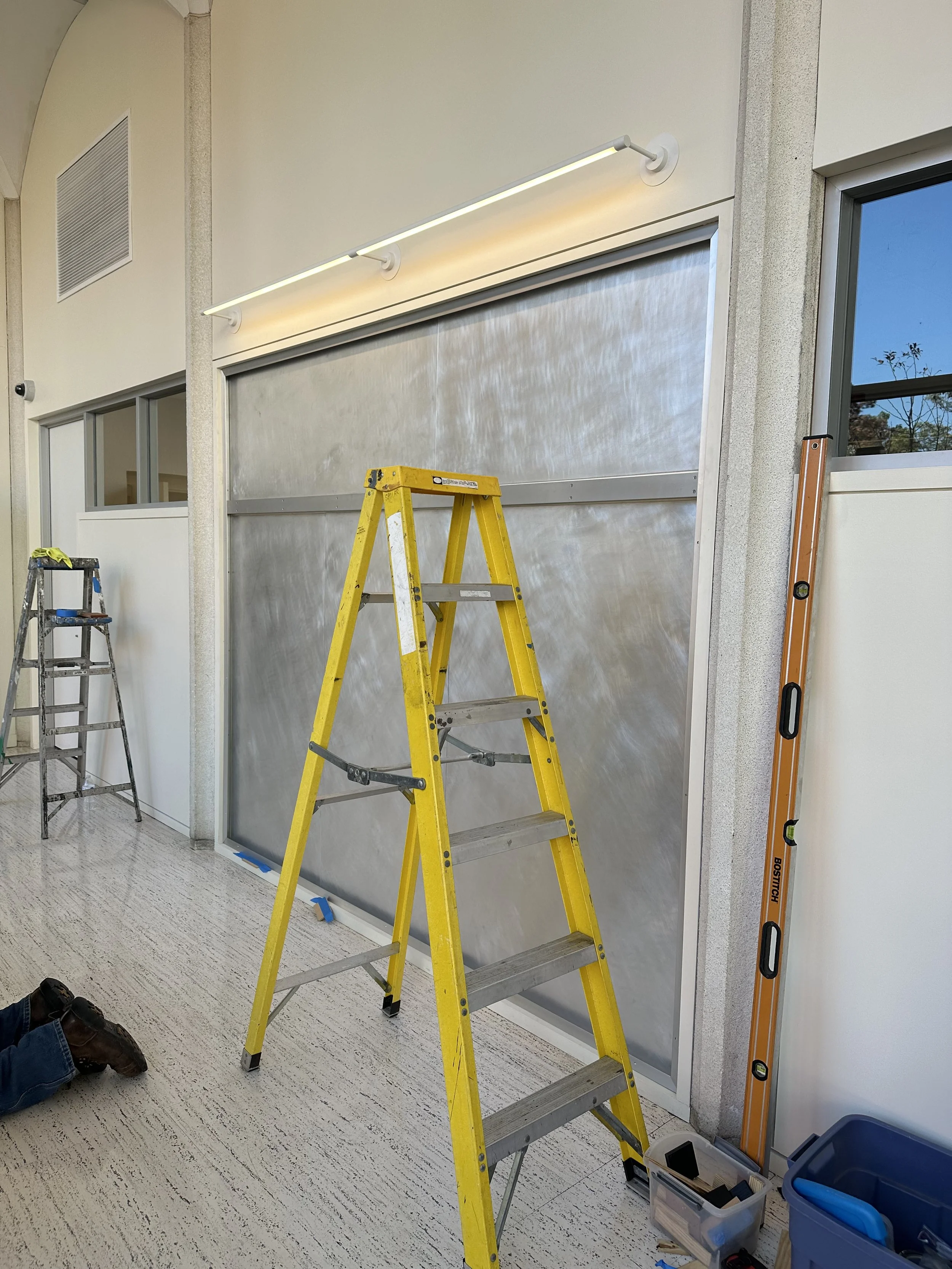
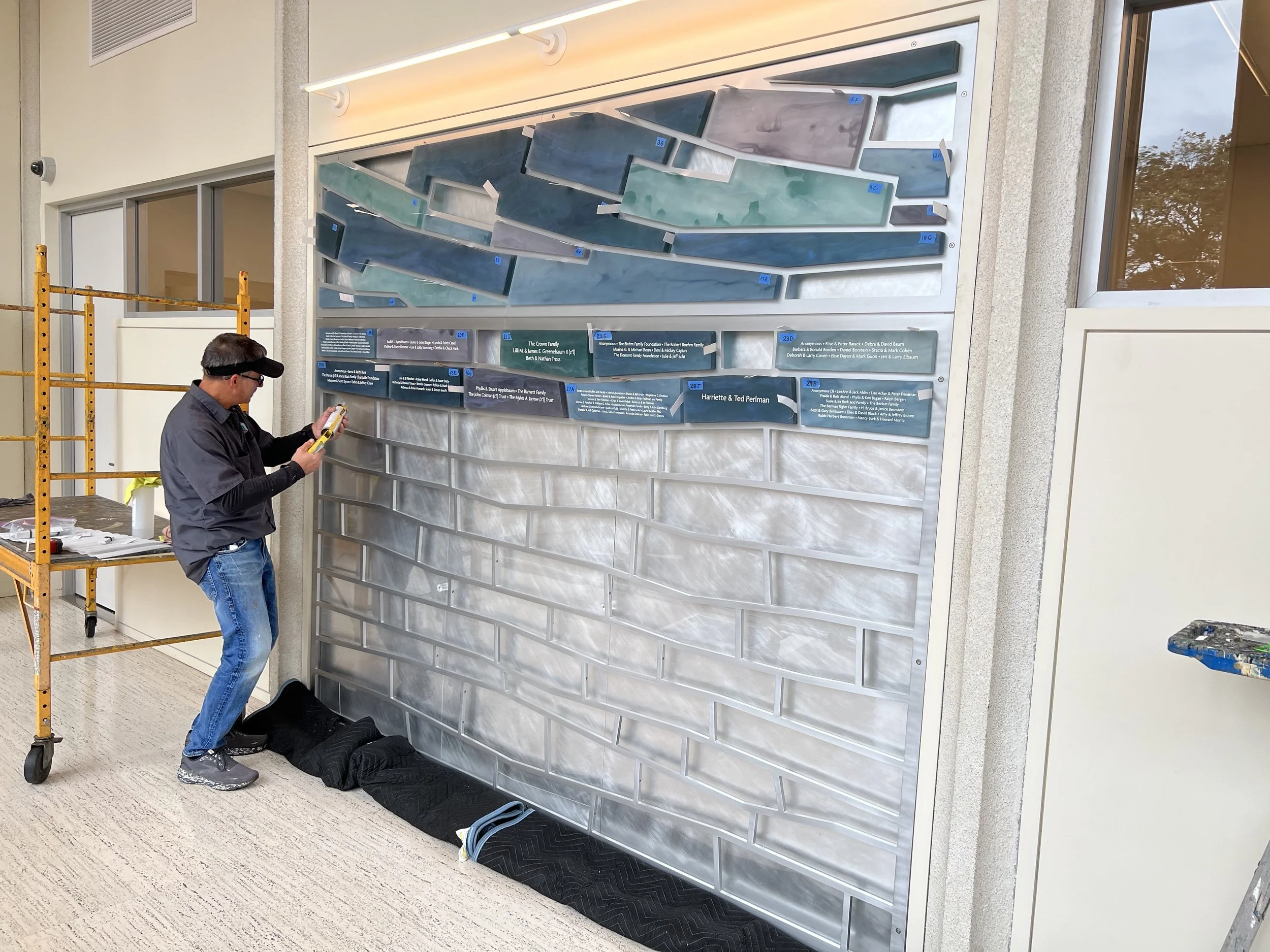
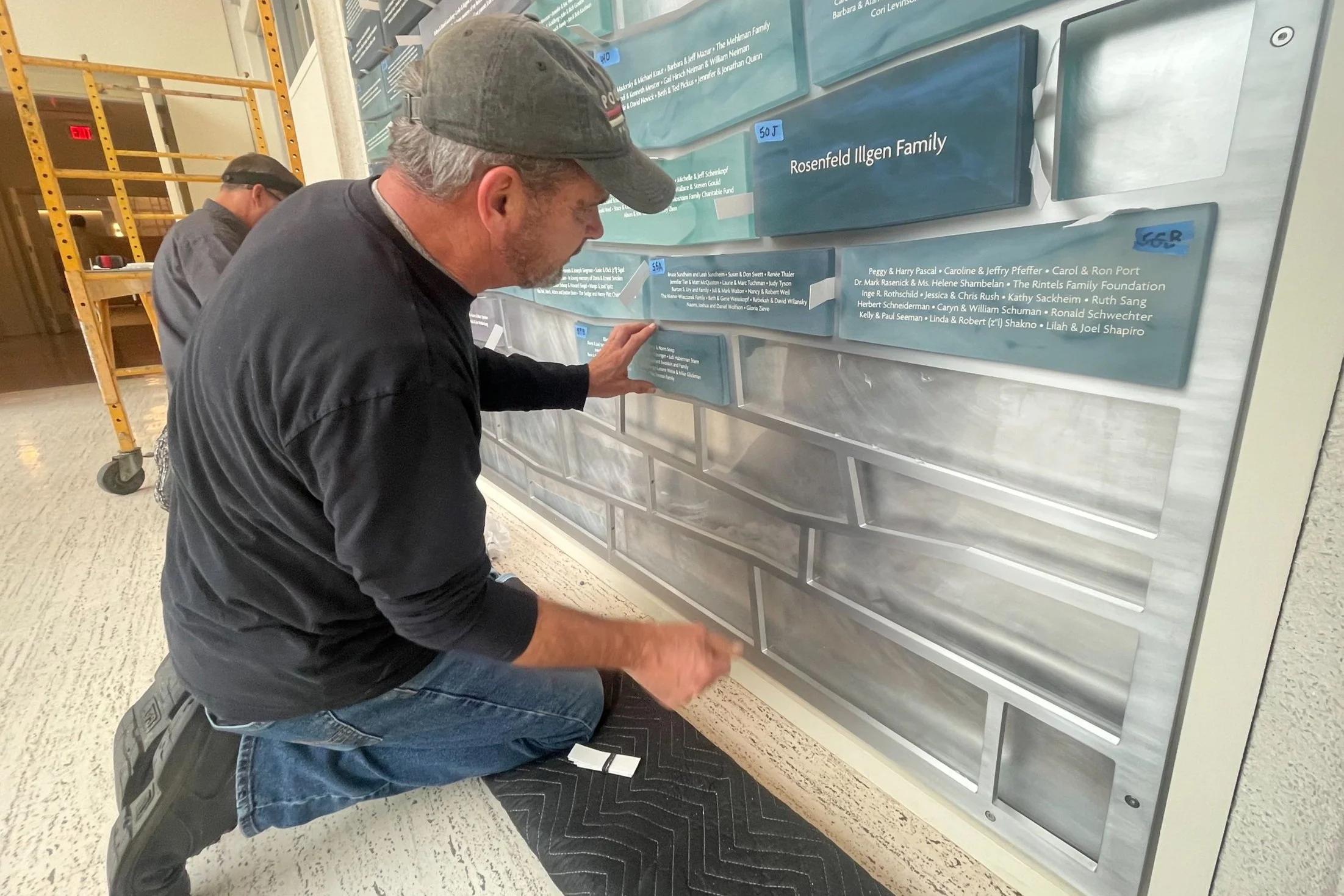
For North Shore Congregation Israel, the completed framework and recognition elements were brought together on-site, translating the approved design and fabrication details into the finished installation.
Because our makers are involved throughout fabrication and installation, they bring firsthand knowledge of the components, materials, and construction methods to the site.
This continuity helps ensure that the finished work reflects the original design intent and fits within the architectural setting for which it was created.

Recognition That Belongs.
The Imagine the Possible Campaign recognition wall was developed specifically for North Shore Congregation Israel, shaped by its architecture, community, and recognition goals.
Its custom materials, carefully considered composition, and architectural connection reflect an approach to donor recognition that goes beyond displaying names.
For Spolar Studio, meaningful recognition begins with understanding the story and the space, developing the right design, and carrying that vision through every stage of making.
From initial inspiration to final installation, each step contributes to a result that feels intentional, cohesive, and connected to the organization it represents.
Recognition shaped by the people and places it celebrates.
From donor walls to area recognition and custom recognition systems, see how we help organizations recognize the people who make their work possible.


ANOTHER STORY OF RECOGNITION
Honoring a Legacy for ovation communities
See how we brought the story of Sarah Chudnow and her family to life through archival imagery, personal artifacts, illuminated displays, and a custom Shabbat candle-lighting station.
Let's Create Something Meaningful
Every organization has a story shaped by the people who support it.
We work with congregations, nonprofits, educational institutions, and community organizations to develop donor recognition installations that celebrate generosity and complement the spaces they occupy.
Have a recognition project in mind? Let's talk about the possibilities.