
← MATERIALS + METHODS
02 / Woods
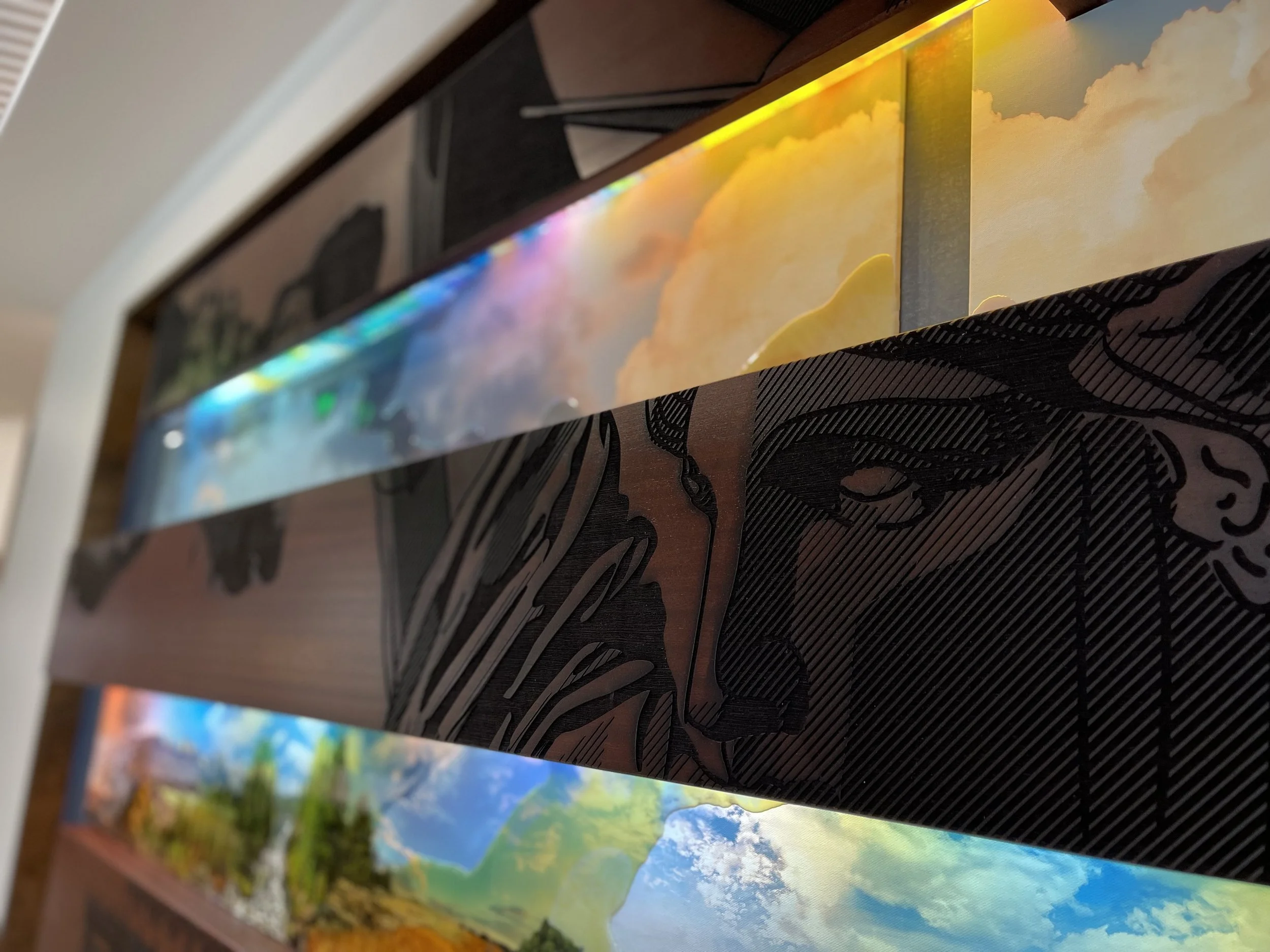
Wood has the power to shape how a space feels.
No two pieces of wood are exactly alike. Grain, color, texture, and natural variation give the material a presence that can make an environment feel warmer, more tactile, and more connected to place.
We consider species, construction, finish, fabrication, environment, and long-term use as part of the design process.
The result is wood that feels intentional to the space.
Solid wood
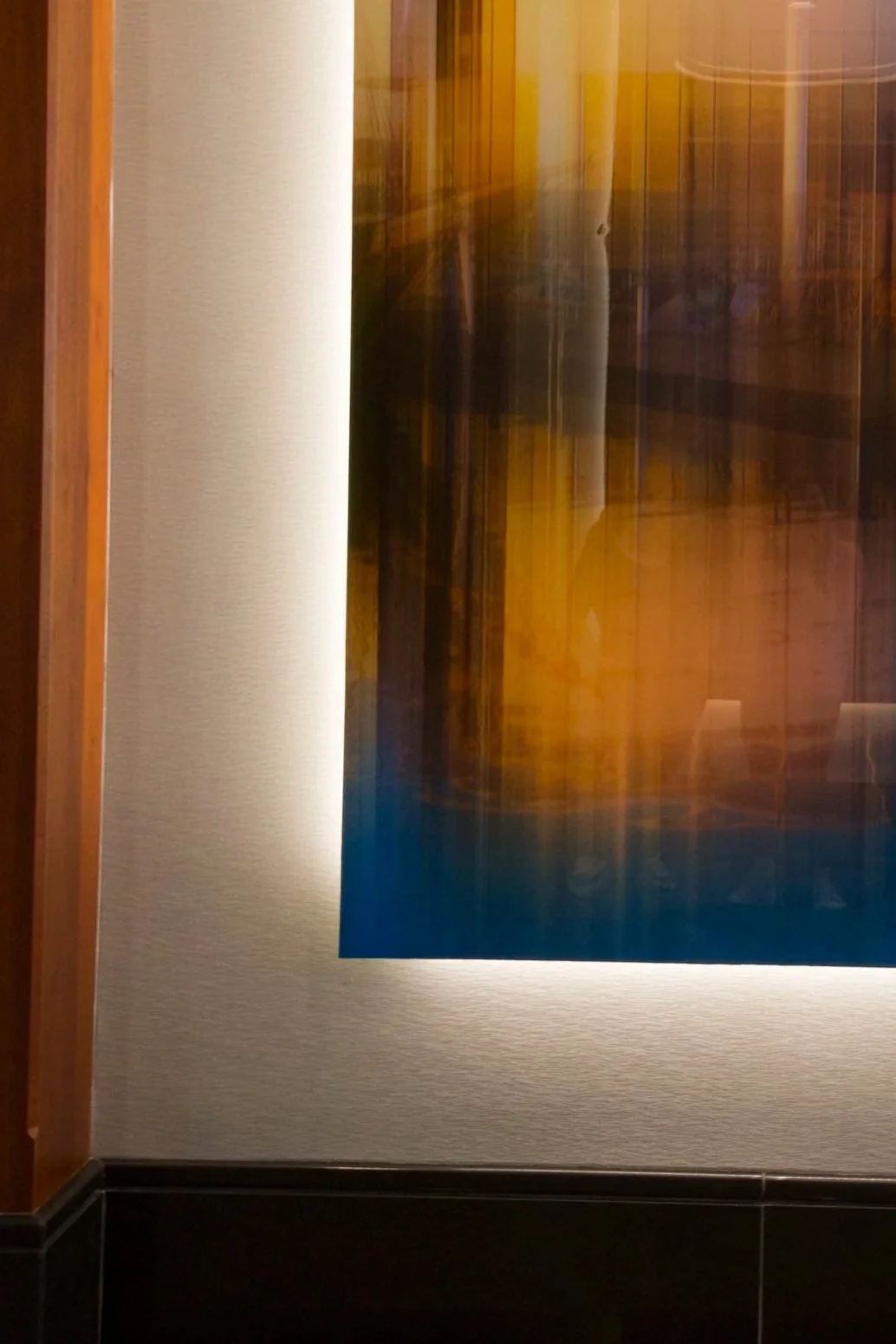
Light is concealed behind dimensional elements to create a soft glow around the form, adding depth and separation without exposing the light source.
Veneer
A thin layer of real wood applied over a stable substrate, allowing the appearance of natural wood to extend across larger surfaces and fabricated forms.
Plywood
Layered wood construction that provides strength and stability while offering the option to feature or conceal its distinctive edge.
MDF + Engineered Wood
Consistent, stable substrates well suited for painted finishes, dimensional fabrication, routed details, and applications where natural grain isn't required.
From Selection TO FINISH

Selection
Species and construction are selected around the desired appearance, application, scale, budget, and conditions of the space.

Design
Grain direction, thickness, exposed edges, joinery, dimensional details, and integration with other materials are considered as part of the overall concept.

Fabrication
Wood can be cut, CNC routed, engraved, layered, shaped, assembled, and combined with other fabricated components.

Finishing
Stains, paints, clear coats, and other finishes are selected to achieve the intended appearance while protecting the material for its application.

Installation
Mounting, seams, weight, wall conditions, and movement of the material are considered when determining how the finished elements come together in the space.
details that matter

Species
Each species brings its own grain, color, density, and visual character.

Edges
Exposed edges can reveal solid wood or layered construction, while finished edges can create a more seamless appearance.

Grain
Grain pattern and direction can become an intentional part of the composition.

Scale
Solid wood, veneer, plywood, and engineered products each behave differently at larger sizes.

Natural Variations
Color, grain, knots, and other characteristics vary naturally from piece to piece.

Environment
Humidity, moisture, temperature, sunlight, and location influence material and finish selection.

Stains + Color
Stains can enhance or shift the natural tone while allowing the character of the wood to remain visible.

Fabrication
Species, thickness, grain, and construction affect how wood responds to routing, engraving, cutting, and assembly.

Finish
Clear coats and protective finishes affect sheen, color, feel, and long-term performance.

Maintenance
Finish and application are considered with cleaning, wear, repair, and long-term use in mind.
Woods in practice
Fireside Theatre
Illuminated Dimensional MuraL
Integrated lighting works through layered dimensional elements to create depth and shifts in color across the installation.
AO Smith
Lit Resin Countertop
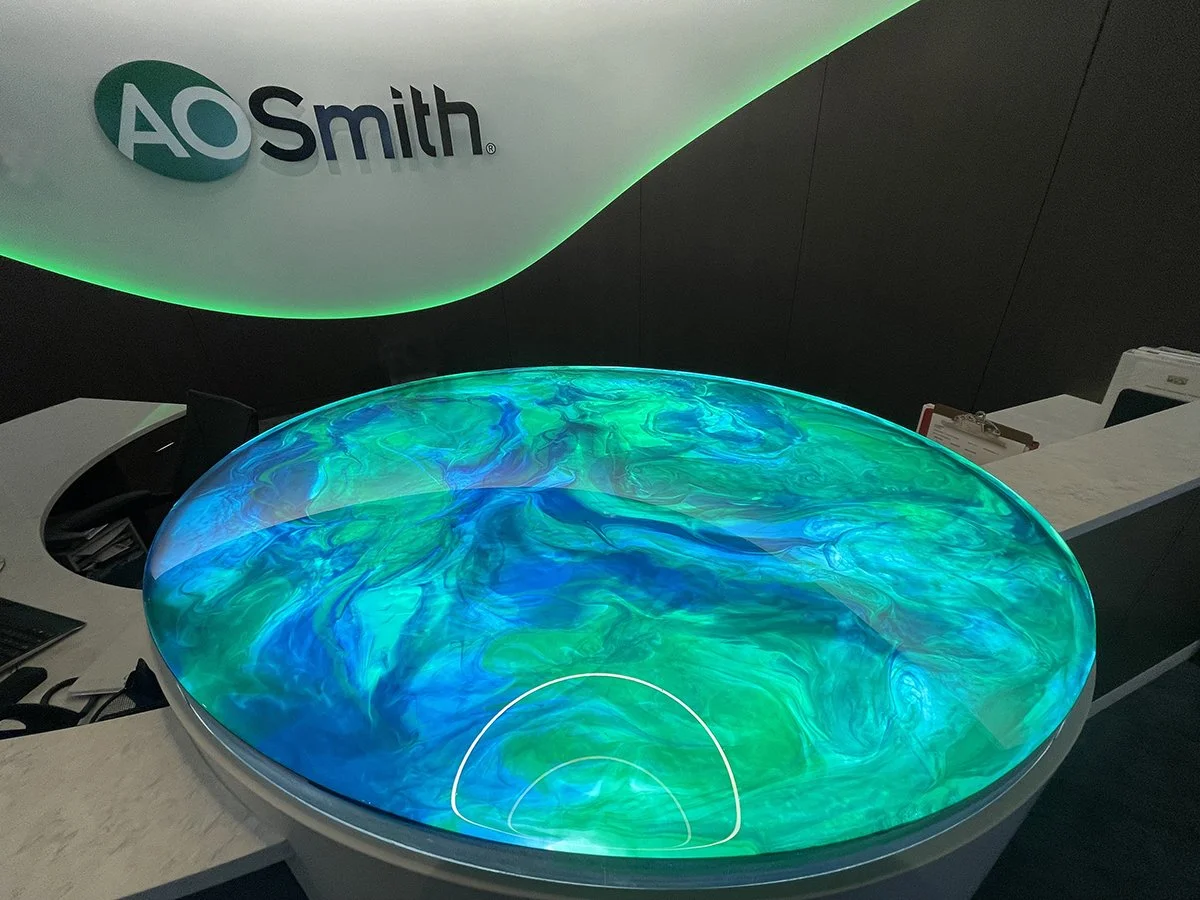
Lighting beneath formed resin reveals the material's color, depth, and movement while turning the surface into a focal point.
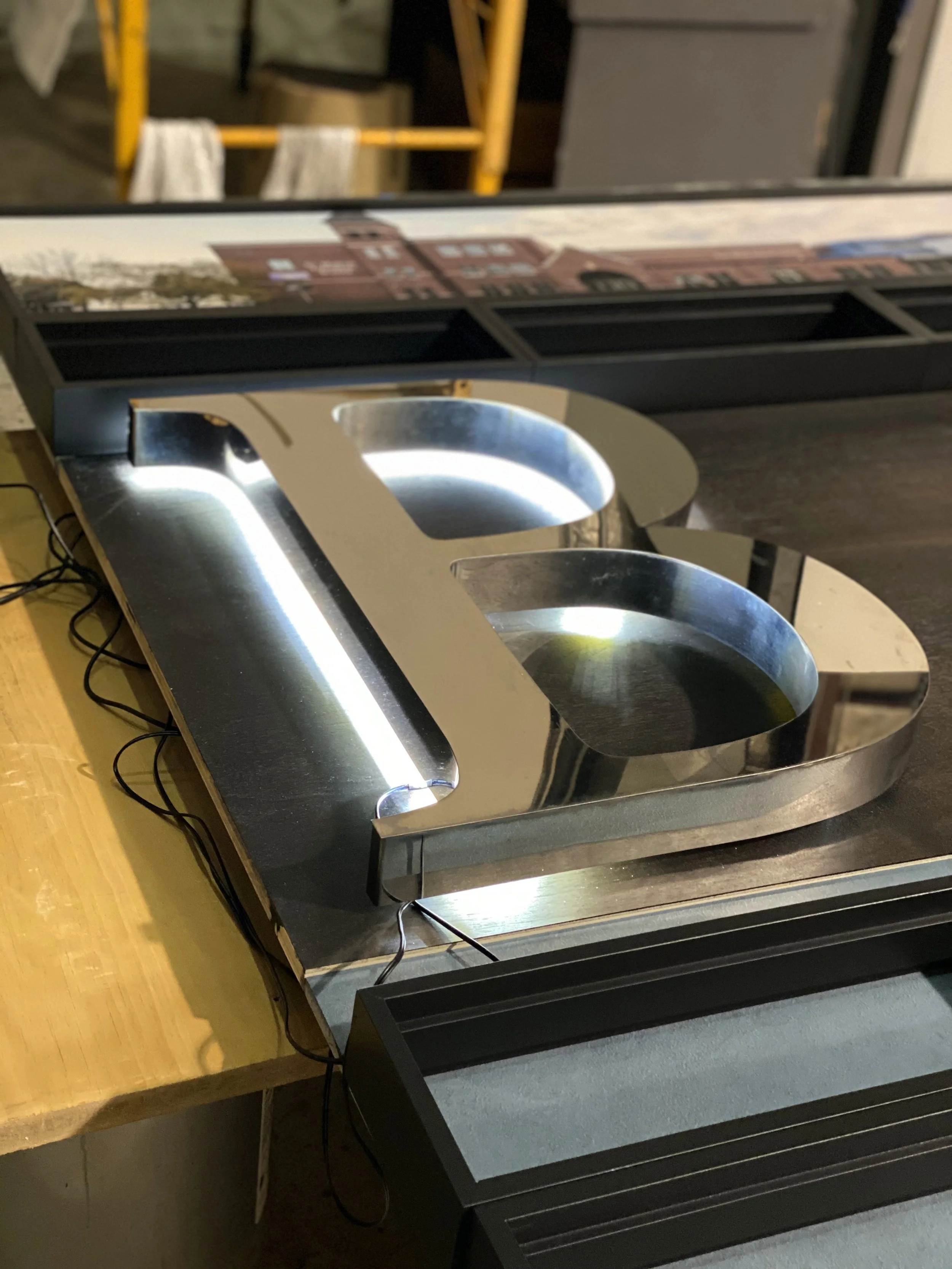
Bradley Foundation
Signage Niche
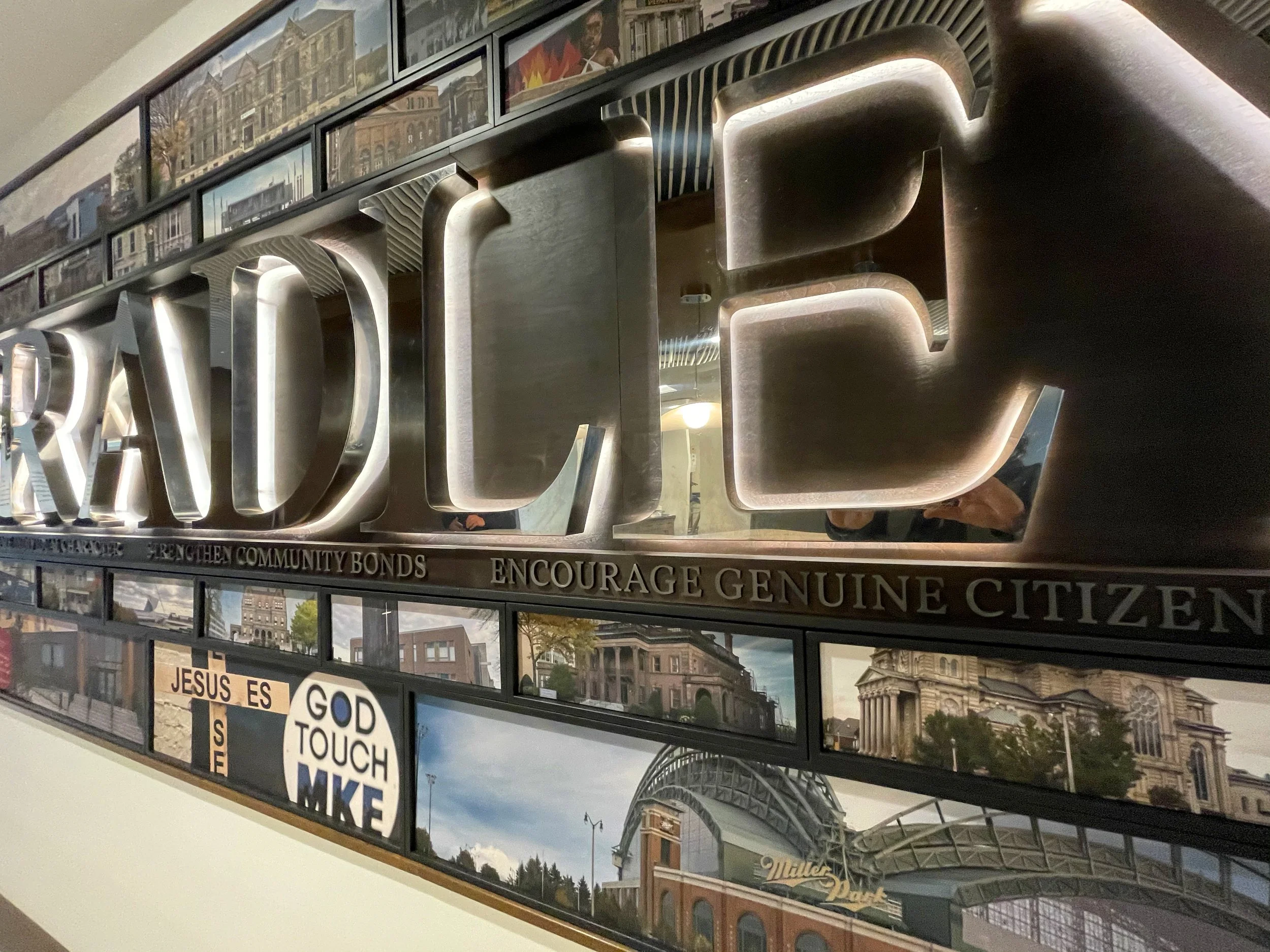
Concealed lighting highlights dimensional lettering while keeping the light source out of view.
Marquette University
Highlighting Values
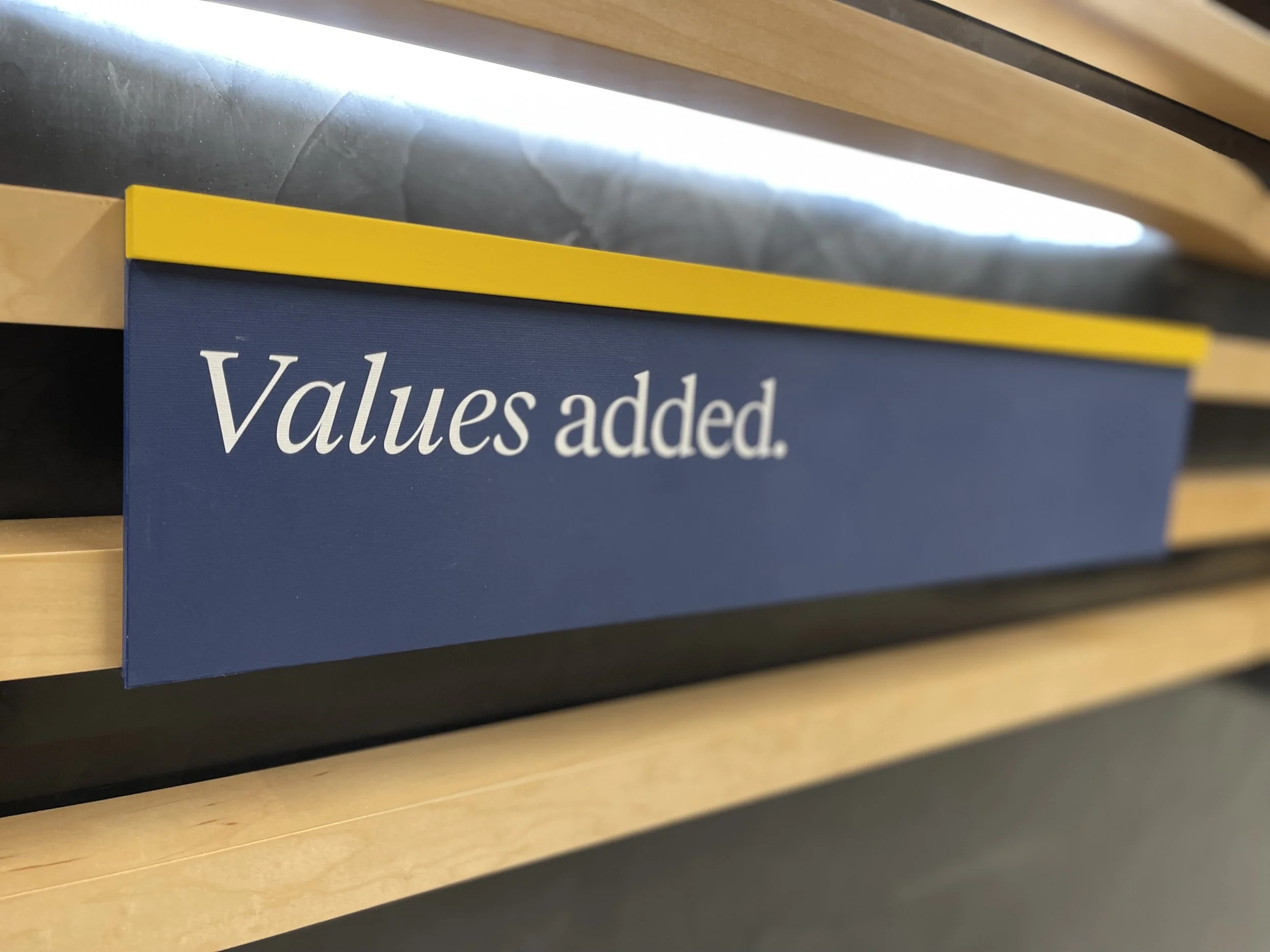
Lighting is used selectively to highlight messaging and dimensional elements within the display.
materials that pair well with woods
Acrylic + Prints
Metal
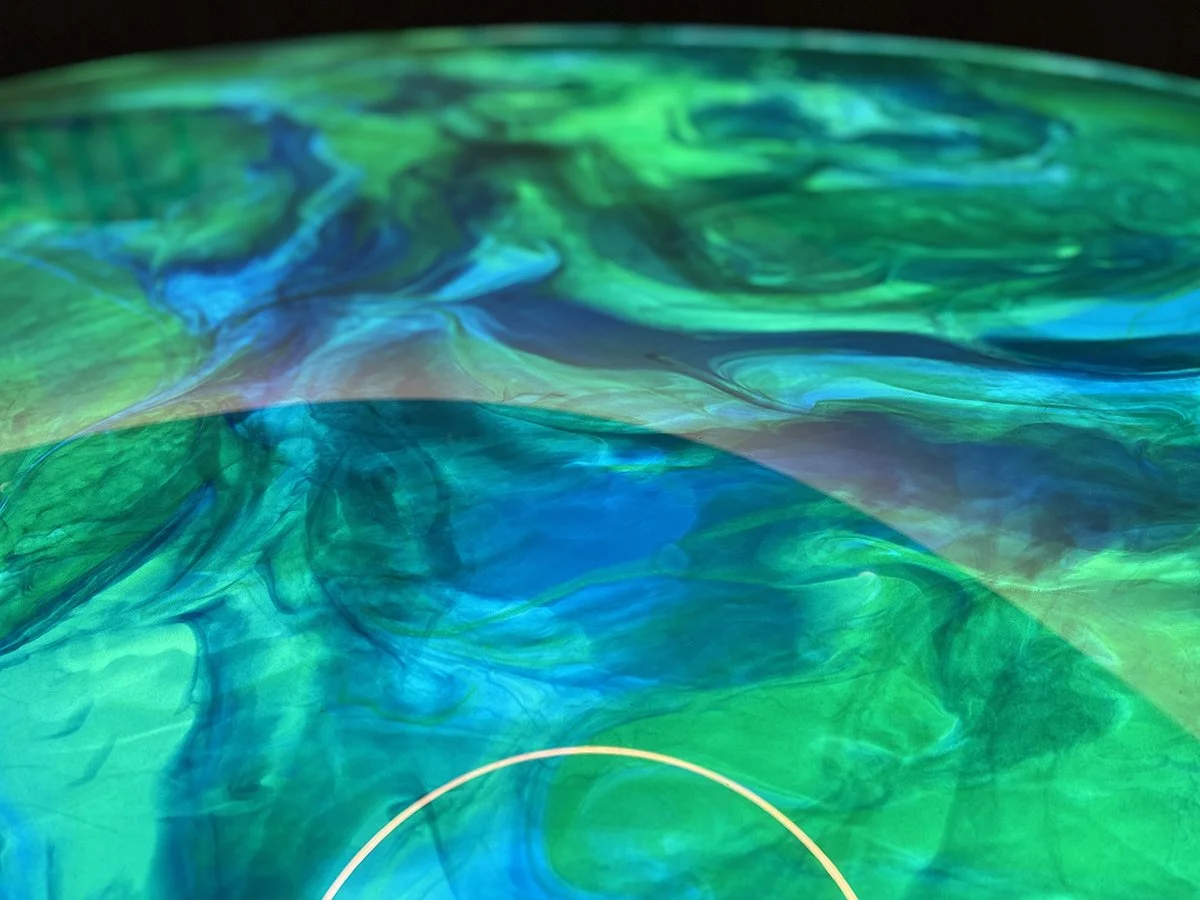
Resin
Wood FAQ
-
We work with solid hardwoods, veneers, plywood, MDF, and other engineered wood products. The right material depends on the appearance, construction, scale, environment, and budget of the project.
-
Yes. Wood can be left natural, stained to enhance or alter its tone, clear coated, or painted. Finish selection depends on both the desired appearance and how the finished piece will be used.
-
Yes. Wood can be CNC routed, laser engraved, printed, painted, or combined with dimensional lettering and applied graphics depending on the desired effect.
-
Yes. Wood is a natural material, and its color and appearance can change with age, light exposure, humidity, and environmental conditions. We account for those characteristics when selecting materials and finishes.
-
Absolutely. Wood pairs particularly well with acrylic, metal, resin, printed graphics, and integrated lighting. Combining materials allows us to use the warmth and texture of wood while introducing contrast, dimension, color, or light.
keep exploring
VIEW MATERIALS + METHODS
CASE STUDIES